

Commercial HVAC systems are designed to operate in controlled cycles, maintaining comfortable temperatures while balancing energy consumption and equipment performance. However, when a system begins turning on and off more frequently than intended, it may be experiencing a problem known as commercial HVAC short cycling.
Short cycling can affect rooftop units, air conditioning systems, heat pumps, and other commercial heating and cooling equipment. While it may initially seem like a minor operational issue, repeated cycling can increase energy costs, accelerate component wear, and eventually lead to expensive repairs or unexpected downtime.
For facility managers and building owners throughout Utah, understanding the causes and warning signs of HVAC short cycling can help prevent small performance problems from becoming major mechanical failures.
What Is Commercial HVAC Short Cycling?
Commercial HVAC short cycling occurs when heating or cooling equipment starts and stops before completing its intended operating cycle.
Under normal conditions, HVAC equipment operates long enough to satisfy the building’s heating or cooling demand before shutting down. The length and frequency of these cycles depend on equipment design, building conditions, outdoor temperatures, and system controls.
When short cycling occurs, equipment may repeatedly start, run briefly, shut off, and restart without maintaining consistent indoor temperatures.
This problem is particularly concerning for commercial buildings because larger HVAC systems often serve multiple zones, operate for extended periods, and support temperature-sensitive environments.
Facilities experiencing frequent equipment cycling may benefit from professional commercial HVAC services to identify underlying mechanical or control-related problems.
6 Common Causes of Commercial HVAC Short Cycling
Several mechanical, electrical, and operational issues can contribute to short cycling. Identifying the underlying cause is essential because the appropriate repair depends on which system components are affected.
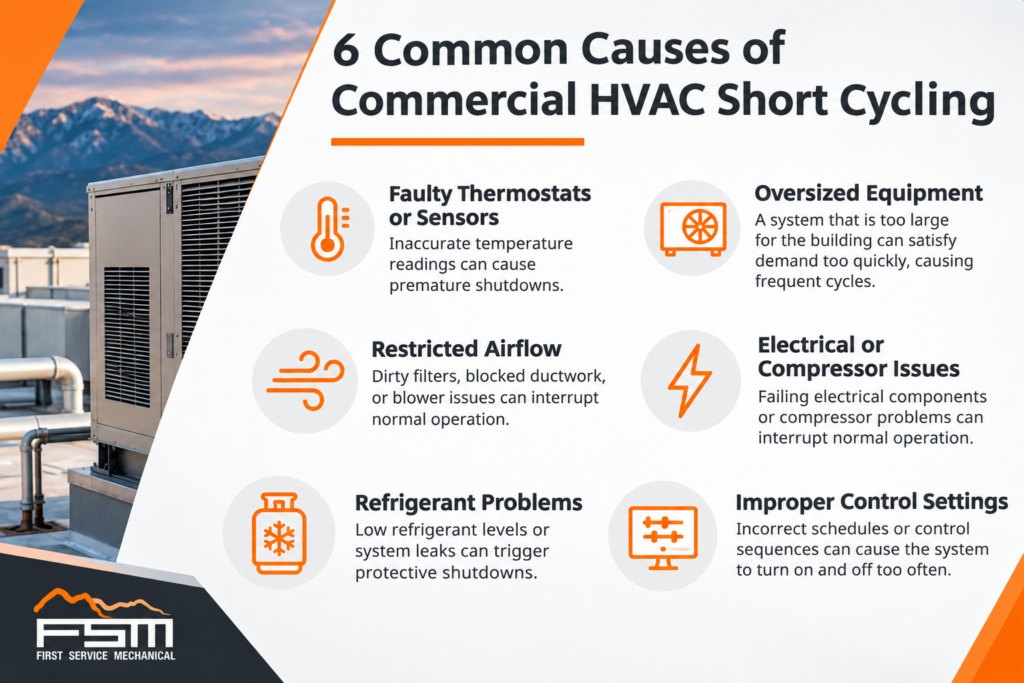
1. Faulty Thermostats or Temperature Sensors
Commercial HVAC systems rely on thermostats and temperature sensors to determine when heating or cooling is necessary.
When sensors become inaccurate, poorly positioned, or improperly calibrated, they may send incorrect temperature readings to the system.
For example, a thermostat located near a heat-producing appliance or exposed to direct sunlight may incorrectly detect that the surrounding space has reached its desired temperature.
This can cause equipment to shut down prematurely and restart shortly afterward.
Building automation systems and improperly configured control sequences can create similar problems. Learn more about how commercial HVAC controls improve efficiency and equipment life.
2. Restricted Airflow
Insufficient airflow is another common contributor to commercial HVAC short cycling.
Dirty air filters, blocked ductwork, malfunctioning dampers, and failing blower components can restrict the movement of conditioned air throughout a building.
During cooling operations, inadequate airflow may cause evaporator coils to become excessively cold, potentially triggering protective shutdowns. During heating operations, restricted airflow can contribute to overheating and activation of safety limits.
These shutdowns may repeat until the airflow restriction is corrected.
Commercial facilities with recurring airflow problems may also experience uneven temperatures, poor comfort, and reduced system efficiency.
3. Refrigerant Problems
Commercial air conditioning systems depend on proper refrigerant charge and operating pressures to maintain reliable cooling performance.
Low refrigerant levels caused by leaks, incorrect charging, or other refrigeration system problems can affect heat transfer and trigger protective controls.
Depending on the equipment and operating conditions, these issues may cause compressors to shut down and restart repeatedly.
Refrigerant problems should be evaluated by qualified HVAC technicians who can inspect system pressures, identify potential leaks, and determine the appropriate corrective action.
Simply adding refrigerant without identifying the underlying problem may fail to resolve the issue.
4. Oversized HVAC Equipment
An improperly sized commercial HVAC system may satisfy a building’s temperature demand too quickly, resulting in frequent starts and stops.
Oversized equipment can be especially problematic in buildings where occupancy levels, internal heat loads, or space configurations have changed.
For example, a rooftop unit originally selected for a heavily occupied commercial space may operate differently after renovations reduce the building’s cooling requirements.
Short operating cycles can contribute to inconsistent temperatures, reduced humidity control during cooling, and unnecessary equipment wear.
A professional HVAC assessment can help determine whether equipment sizing, system configuration, or operational adjustments are contributing to the problem.
5. Electrical or Compressor Problems
Commercial HVAC systems contain electrical components that control equipment startup, operation, and shutdown.
Failing contactors, loose electrical connections, defective relays, and compressor-related problems can interrupt normal operation.
Some systems also contain protective devices designed to shut equipment down when abnormal electrical or operating conditions are detected.
If these protective controls repeatedly activate, the equipment may appear to be short cycling.
Because electrical and compressor problems can become serious equipment failures, repeated shutdowns should be investigated promptly by qualified professionals.
6. Improper HVAC Control Settings
Modern commercial buildings frequently use building automation systems, programmable thermostats, and integrated HVAC controls to manage equipment operation.
Incorrect scheduling, poorly configured temperature differentials, conflicting control commands, or inappropriate staging sequences can contribute to excessive cycling.
For example, multiple heating and cooling components may operate inefficiently if control sequences are not properly coordinated.
Addressing these issues may require adjustments to control programming, sensor calibration, or system operating sequences rather than replacing mechanical equipment.
Warning Signs Your Commercial HVAC System Is Short Cycling
Short cycling is not always immediately obvious, especially in facilities where mechanical equipment is located on rooftops or in dedicated equipment rooms.
However, several warning signs may indicate that a commercial HVAC system is operating abnormally.
Frequent equipment starts and stops: Heating or cooling equipment repeatedly activates and shuts down over unusually short periods.
Inconsistent indoor temperatures: Occupants experience temperature fluctuations because equipment is not operating long enough to maintain stable conditions.
Increasing energy costs: Frequent startups and inefficient operation may contribute to unnecessary energy consumption.
Unusual equipment noises: Repeated startup activity may make mechanical or electrical problems more noticeable.
Recurring service calls: Equipment that repeatedly shuts down may require more frequent troubleshooting and repairs.
Premature component wear: Compressors, motors, contactors, and other components may experience additional stress from excessive cycling.
Facility managers noticing these symptoms should consider scheduling a professional system evaluation before performance deteriorates further.
Why Commercial HVAC Short Cycling Can Lead to Expensive Repairs
One of the biggest concerns associated with short cycling is the additional stress placed on mechanical equipment.
Compressors and motors experience significant electrical and mechanical demands during startup. When equipment cycles excessively, these components may experience more frequent startup stress than intended.
Over time, repeated cycling can contribute to premature wear, increased maintenance requirements, and unexpected failures.
Short cycling can also affect building operations.
Office buildings may experience recurring comfort complaints, while warehouses, manufacturing facilities, and healthcare environments may face additional challenges when reliable temperature control is essential.
For facilities operating rooftop equipment, repeated cycling may also raise questions about the equipment’s remaining useful life.
First Service Mechanical’s guide on when to repair or replace a commercial rooftop HVAC unit explains additional factors facility managers should consider when evaluating aging systems.
How Professional HVAC Technicians Diagnose Short Cycling
Effective commercial HVAC troubleshooting begins with identifying why the equipment is shutting down prematurely.
Rather than immediately replacing components, qualified technicians evaluate system operation and look for conditions that may be interrupting normal cycles.
A professional inspection may include:
- Reviewing equipment operating history and fault codes
- Testing thermostats, sensors, and control sequences
- Evaluating airflow and filter conditions
- Inspecting electrical components and protective devices
- Checking refrigerant pressures and system performance
- Assessing compressor operation and equipment staging
- Verifying that equipment is operating within manufacturer specifications
The appropriate diagnostic process depends on the type of equipment and the symptoms observed.
A comprehensive assessment helps distinguish between mechanical failures, control problems, airflow restrictions, and equipment sizing concerns.
This approach can prevent unnecessary repairs while helping facility managers make informed decisions about their HVAC systems.
Preventing Short Cycling Through Commercial HVAC Maintenance
Although not every short cycling problem can be prevented, regular maintenance can help identify developing issues before they disrupt building operations.
Preventive maintenance allows technicians to inspect critical components, verify equipment operation, evaluate airflow, and identify potential performance concerns.
For commercial facilities, maintenance activities may include cleaning coils, replacing filters, inspecting electrical connections, checking controls, and reviewing equipment operating conditions.
Routine service is particularly important for rooftop units and other equipment exposed to Utah’s changing seasonal temperatures.
First Service Mechanical provides HVAC and refrigeration maintenance services designed to support equipment reliability, operating efficiency, and long-term performance.
Facility managers can also review the commercial HVAC and refrigeration maintenance checklist for additional guidance on maintaining critical mechanical systems throughout the year.
A proactive maintenance strategy can help reduce unexpected breakdowns, improve equipment reliability, and support more predictable facility operating costs.
Commercial HVAC Troubleshooting and Repair in Salt Lake City, Utah
Commercial HVAC short cycling should not be ignored. What begins as an occasional equipment shutdown can develop into recurring comfort problems, higher operating expenses, and potentially expensive mechanical repairs.
Whether the underlying issue involves restricted airflow, faulty controls, refrigerant problems, or aging equipment, identifying the cause early can help protect system performance and minimize operational disruptions.
First Service Mechanical provides commercial HVAC services for businesses throughout Salt Lake City, the Wasatch Front, and surrounding Utah communities.
With experience supporting commercial and industrial HVAC equipment, controls, preventive maintenance, and mechanical systems, FSM helps facility managers identify performance problems and develop practical solutions for their buildings.
Is your commercial HVAC system turning on and off too frequently?
Contact First Service Mechanical to schedule professional HVAC troubleshooting and learn how our team can help restore reliable operation, improve system efficiency, and protect your equipment investment.

Leave a Reply