

Commercial cooling tower maintenance plays an important role in keeping large HVAC systems operating efficiently and reliably. For facilities that depend on water-cooled chillers and other centralized cooling equipment, a poorly maintained cooling tower can contribute to higher energy consumption, inconsistent cooling performance, and unexpected mechanical failures.
Cooling towers are common in commercial buildings, industrial facilities, healthcare environments, and other properties with substantial cooling demands. Because these systems operate under demanding conditions, routine inspections and maintenance are essential for protecting equipment and avoiding unnecessary disruptions.
Understanding common cooling tower problems, recognizing early warning signs, and implementing a proactive maintenance strategy can help facility managers maintain dependable cooling performance throughout the year.
How Do Commercial Cooling Towers Work?
A commercial cooling tower removes heat from water circulating through a building’s cooling system. In many water-cooled HVAC applications, warm condenser water travels from the chiller to the cooling tower, where heat is transferred to the atmosphere primarily through evaporation.
The cooled water then returns to the chiller, allowing the cooling process to continue.
Cooling towers typically contain several important components, including fans, motors, fill media, water distribution systems, pumps, and collection basins. Each component contributes to efficient heat transfer and reliable operation.
When these components become dirty, damaged, or improperly adjusted, the cooling tower may struggle to reject heat effectively.
For buildings with centralized cooling systems, cooling tower performance directly influences the operation of other HVAC equipment. This makes tower maintenance an important consideration within a broader commercial HVAC maintenance program.
Common Commercial Cooling Tower Problems
Cooling towers are exposed to water, outdoor conditions, airborne debris, and continuous mechanical operation. Over time, these conditions can create several performance and reliability concerns.
1. Scale and Mineral Buildup
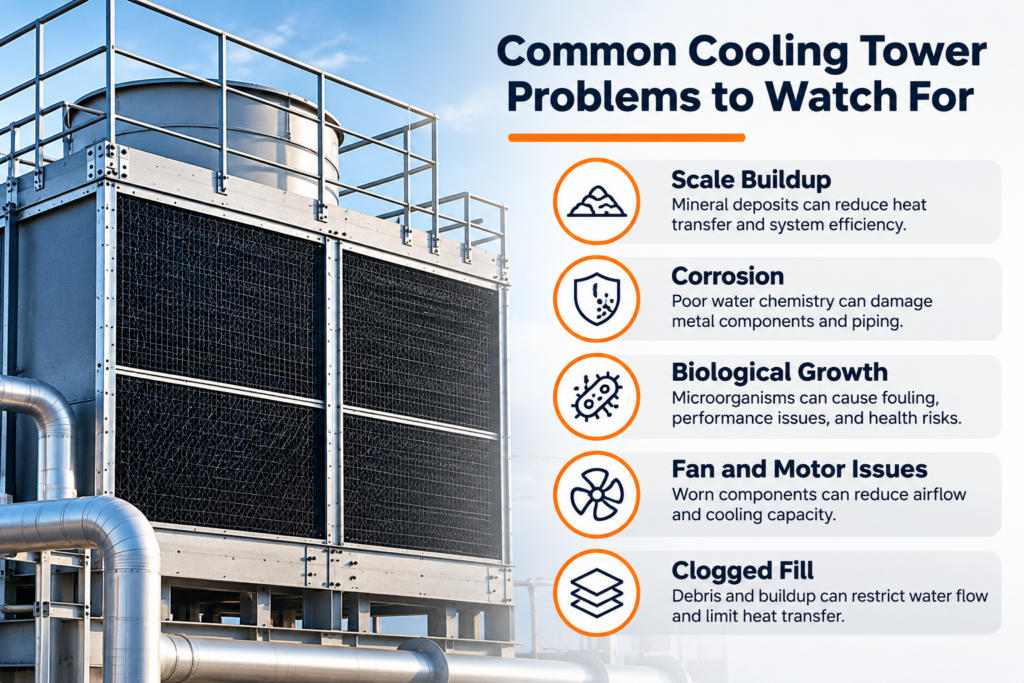
As water evaporates during the cooling process, dissolved minerals remain behind and become more concentrated.
Without appropriate water treatment and monitoring, minerals can form scale on heat transfer surfaces and internal components.
Scale buildup can restrict water flow, reduce heat transfer efficiency, and increase the workload on connected cooling equipment.
2. Corrosion and Equipment Deterioration
Cooling towers contain metal components that may be exposed to moisture, dissolved minerals, and changing water chemistry.
Improper water treatment can accelerate corrosion, potentially damaging piping, structural components, and mechanical equipment.
Corrosion may eventually contribute to leaks, reduced equipment reliability, and expensive repairs.
3. Biological Growth
Warm water and exposure to outdoor conditions can create environments where microorganisms grow.
Without an effective water management program, biological contamination can contribute to fouling, reduced system performance, and health risks, including Legionella.
The CDC’s cooling tower guidance emphasizes the importance of appropriate water management practices for controlling Legionella risks in cooling tower systems.
4. Fan and Motor Problems
Cooling tower fans move air through the equipment to support heat rejection.
Worn bearings, damaged fan blades, belt problems, motor issues, and excessive vibration can reduce airflow and affect performance.
If these problems continue without attention, they may lead to mechanical failure or unexpected shutdowns.
5. Clogged Fill and Water Distribution Issues
Fill media increases the surface area available for heat transfer.
When fill becomes obstructed by sediment, scale, or biological deposits, cooling efficiency can decline.
Blocked spray nozzles or uneven water distribution may create similar problems by preventing water from flowing properly through the tower.
Warning Signs Your Cooling Tower Needs Maintenance
Cooling tower problems do not always cause an immediate shutdown. Many develop gradually, making it important for facility managers to recognize changes in equipment performance.
Common warning signs include:
- Rising energy consumption: Cooling equipment may require more energy when heat rejection becomes less effective.
- Higher condenser water temperatures: Water returning from the tower may be warmer than expected under comparable operating conditions.
- Unusual noises or vibration: Mechanical wear, misalignment, or damaged components may affect fan and motor operation.
- Visible leaks: Water escaping from piping, connections, or tower components may indicate deterioration.
- Reduced cooling capacity: Connected chillers may struggle to maintain required conditions.
- Frequent equipment alarms: Recurring warnings may indicate problems with water flow, temperature, or mechanical operation.
These symptoms do not automatically mean the cooling tower itself is responsible. Problems elsewhere in the HVAC system can produce similar results.
A professional mechanical assessment can help identify the underlying cause before unnecessary repairs or replacements are performed.
Why Cooling Tower Water Treatment Matters
Water quality is one of the most important factors affecting cooling tower performance.
Because cooling towers continuously lose water through evaporation, dissolved minerals and other contaminants can become concentrated within the circulating water.
An effective water treatment program helps manage scaling, corrosion, biological growth, and fouling.
Depending on the system, water management may involve monitoring water chemistry, controlling dissolved solids, maintaining appropriate treatment levels, and coordinating inspections with qualified water treatment professionals.
Water treatment requirements vary based on equipment design, local water conditions, operating temperatures, and facility requirements.
Rather than treating water quality as an isolated concern, facility managers should consider how it affects the overall mechanical system.
How Cooling Tower Problems Affect Chiller Performance
Cooling towers and water-cooled chillers operate as connected systems.
When a cooling tower cannot reject heat effectively, condenser water temperatures may increase. This can force the chiller to operate under more demanding conditions to maintain the building’s cooling requirements.
Potential consequences include reduced cooling efficiency, increased electrical consumption, equipment alarms, and additional mechanical stress.
For facilities with significant cooling demands, these issues can affect operating expenses and equipment reliability.
Cooling tower problems may also expose weaknesses in connected pumps and piping systems.
For example, inadequate water flow can affect heat transfer even when the tower’s fans and fill are functioning properly.
Facility managers experiencing circulation problems may benefit from reviewing the factors involved in commercial HVAC pump repair versus replacement.
Evaluating the entire cooling system helps ensure maintenance decisions address the actual source of performance problems.
What Should Commercial Cooling Tower Maintenance Include?
An effective commercial cooling tower maintenance program should reflect the equipment manufacturer’s recommendations, system design, operating conditions, and applicable water management requirements.
Although maintenance needs vary, several areas deserve regular attention.
Mechanical inspections: Fans, motors, bearings, belts, and other moving components should be evaluated for wear, vibration, and operating problems.
Water distribution: Technicians should assess whether water is circulating and distributing properly throughout the tower.
Fill and basin condition: Inspections can identify debris, sediment, fouling, or damaged components affecting performance.
Water treatment coordination: Facility teams should maintain an appropriate water management program with qualified professionals.
System performance monitoring: Reviewing operating temperatures, water flow, equipment alarms, and energy trends can help identify developing issues.
Seasonal preparation: Facilities operating in Utah should consider how freezing temperatures, changing cooling loads, and seasonal shutdowns affect equipment requirements.
Routine maintenance also provides an opportunity to document equipment conditions and plan future repairs.
As discussed in FSM’s article on why preventive HVAC maintenance saves commercial buildings money, proactive service can help facilities avoid the financial consequences of unexpected mechanical failures.
When Should You Schedule Professional Cooling Tower Service?
Facility managers should consider professional service when cooling performance declines, equipment begins operating abnormally, or maintenance records reveal recurring problems.
However, waiting for noticeable symptoms is not always the most effective approach.
Scheduled inspections can identify deteriorating components before they affect connected equipment or disrupt building operations.
Facilities with critical cooling requirements may need more frequent monitoring and maintenance based on their operating conditions and equipment specifications.
For businesses managing multiple mechanical systems, coordinating cooling tower inspections with broader HVAC maintenance can also improve visibility into overall system performance.
Commercial Cooling System Maintenance in Utah
Reliable cooling systems are essential for commercial and industrial facilities throughout Utah, particularly those with demanding operating schedules or specialized temperature requirements.
First Service Mechanical provides commercial HVAC and mechanical services throughout the Wasatch Front, including HVAC maintenance, chiller support, pump repair and replacement, mechanical piping, and system performance assessments.
By evaluating connected mechanical equipment and addressing developing performance concerns, facility managers can make more informed maintenance decisions and reduce the risk of unexpected downtime.
Keep Your Commercial Cooling Systems Operating Reliably
Cooling tower maintenance is an important part of protecting overall HVAC performance. From mechanical inspections to evaluating connected chillers and pumps, a proactive approach can help facilities maintain efficiency and equipment reliability.
If your facility is experiencing cooling performance issues or needs support with its commercial HVAC systems, contact First Service Mechanical to discuss your equipment and maintenance needs.

Leave a Reply