

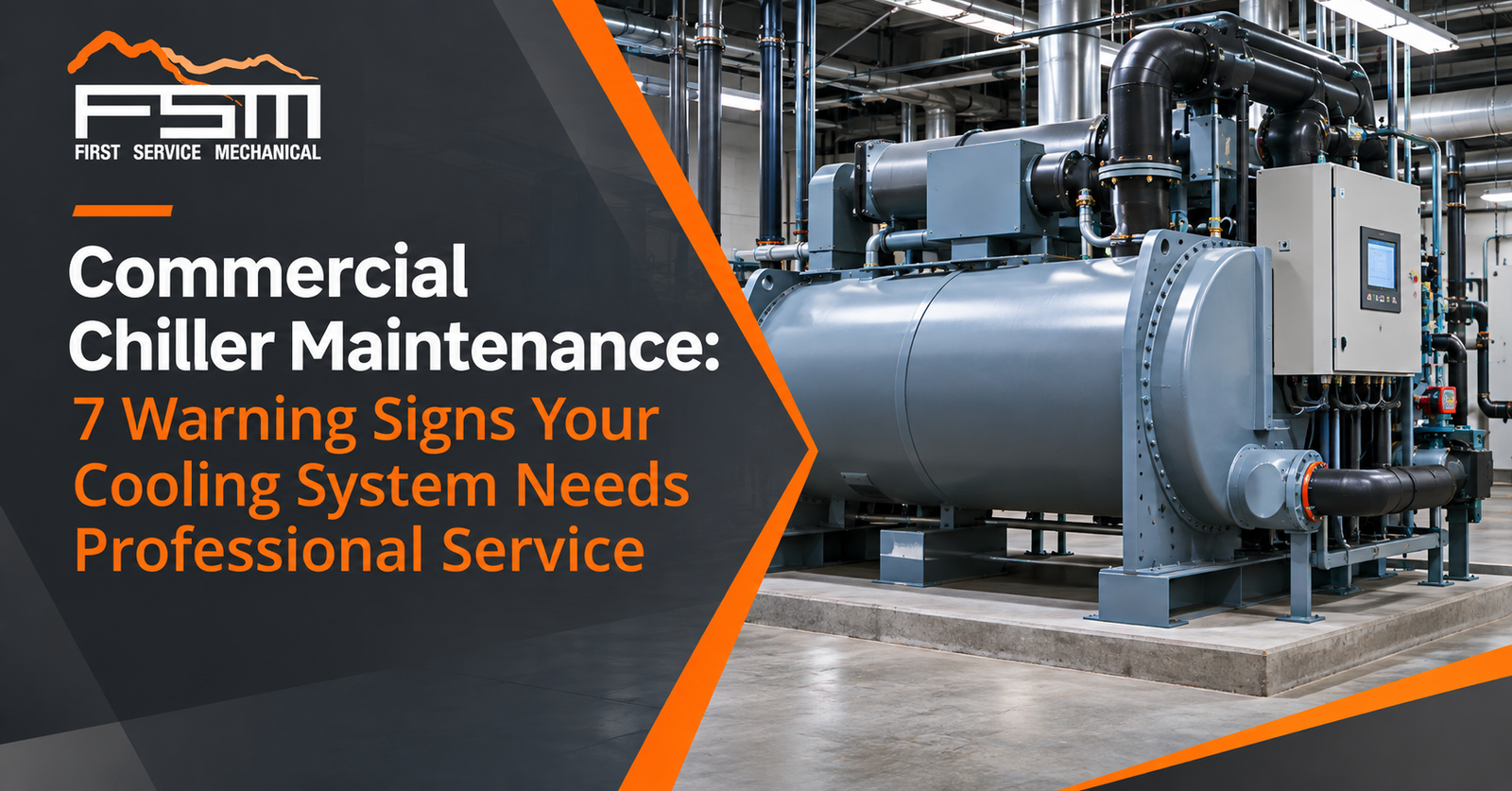
Commercial chillers play a critical role in maintaining comfortable temperatures and supporting daily operations in large commercial and industrial facilities. From office buildings and healthcare facilities to manufacturing plants and data centers, these systems provide the cooling capacity necessary to keep buildings and equipment operating reliably.
When a commercial chiller begins experiencing performance problems, the consequences can extend beyond uncomfortable indoor temperatures. Reduced cooling capacity, increased energy consumption, and unexpected equipment failures can disrupt operations and lead to costly repairs.
Recognizing the early warning signs of chiller problems allows facility managers to address developing issues before they become major failures. A proactive approach to commercial chiller maintenance helps improve system reliability, manage operating costs, and extend equipment life.
Here are seven warning signs that your commercial cooling system may need professional attention.
1. Reduced Cooling Capacity
One of the most noticeable signs of commercial chiller problems is a decline in cooling performance.
If your building struggles to maintain consistent temperatures despite normal system operation, the chiller may not be delivering the required cooling capacity.
Potential causes include:
- Fouled evaporator or condenser tubes
- Refrigerant-related problems
- Reduced chilled-water flow
- Heat transfer inefficiencies
- Compressor performance issues
Reduced cooling capacity can place additional strain on other HVAC components as they attempt to compensate for inadequate cooling.
A professional HVAC system assessment can help identify the source of performance problems and determine whether maintenance, repairs, or system adjustments are necessary.
2. Unusual Noises or Excessive Vibration
Commercial chillers generate normal operating sounds, but changes in noise levels or vibration patterns can indicate developing mechanical problems.
Grinding, rattling, knocking, or unusual humming may be associated with worn bearings, loose components, compressor issues, or problems involving connected pumps.
Excessive vibration can also affect piping connections, mounting components, and surrounding mechanical equipment.
Facility managers should pay attention to changes in equipment operation rather than assuming unusual sounds are normal signs of aging.
Professional commercial chiller repair and maintenance can help identify mechanical concerns before they contribute to additional equipment damage.
3. Rising Energy Consumption
Commercial chillers can represent a significant portion of a facility’s cooling-related energy consumption.
When equipment begins operating inefficiently, electricity costs may increase even when building occupancy, operating schedules, and cooling requirements remain relatively consistent.
Common contributors to reduced chiller efficiency include dirty heat transfer surfaces, improper operating conditions, control problems, and unnecessary equipment runtime.
Facility managers should compare energy consumption against historical performance while accounting for outdoor temperatures and changes in building demand.
First Service Mechanical’s efficiency optimization services help commercial facilities evaluate HVAC performance and identify opportunities to reduce unnecessary energy consumption.
Addressing efficiency problems early can help control operating expenses while supporting reliable cooling performance.
4. Frequent Alarms or Unexpected Shutdowns
Modern commercial chillers use monitoring systems and protective controls to identify abnormal operating conditions.
Frequent alarms, fault notifications, or unexpected shutdowns may indicate that the system is operating outside its intended parameters.
Potential concerns include:
- High or low refrigerant pressure
- Abnormal water temperatures
- Electrical or control faults
- Insufficient water flow
- Compressor protection events
Repeatedly resetting equipment without identifying the underlying problem can allow mechanical or electrical issues to continue developing.
Facility managers should document recurring alarms and arrange professional troubleshooting to determine why the system is experiencing interruptions.
For facilities that depend on continuous cooling, timely service is especially important for reducing operational disruptions.
5. Inconsistent Chilled-Water Temperatures
Chilled-water systems depend on stable operating conditions to deliver cooling throughout a commercial building.
When chilled-water supply temperatures fluctuate unexpectedly, air handling units and other connected equipment may struggle to maintain the desired indoor environment.
Temperature inconsistencies can result from improper water flow, sensor problems, control issues, or reduced chiller performance.
These conditions may also affect equipment cycling and overall system efficiency.
Professional HVAC controls and system optimization can help facility managers evaluate how chillers, pumps, sensors, and connected components operate together.
Identifying control-related problems can improve temperature consistency and reduce unnecessary equipment operation.
6. Refrigerant or Water-System Problems
Commercial chillers rely on properly functioning refrigerant and water circuits to transfer heat efficiently.
Problems within either system can significantly affect cooling performance.
Depending on the chiller configuration, warning signs may include visible water leaks, declining system pressure, abnormal operating readings, or repeated maintenance alerts.
Water quality concerns can also contribute to scaling, corrosion, and fouling within heat transfer components.
These conditions can restrict heat transfer and increase the energy required to maintain cooling capacity.
Because commercial chiller systems contain specialized mechanical and refrigeration components, refrigerant-related concerns and complex system problems should be evaluated by qualified technicians.
Routine inspections and appropriate water treatment practices can help reduce the likelihood of preventable equipment problems.
7. Excessive Cycling or Abnormal Operating Pressures
Commercial chillers are designed to operate within specific temperature, pressure, and loading conditions.
Frequent starting and stopping, commonly called short cycling, can indicate that equipment is not responding properly to cooling demand.
Potential causes include control configuration problems, insufficient system load, temperature sensor issues, or mechanical operating concerns.
Abnormal refrigerant pressures may also indicate condenser problems, refrigerant circuit issues, or other conditions requiring professional evaluation.
Excessive cycling can increase component wear and reduce operational efficiency.
Through scheduled HVAC and refrigeration maintenance, facility managers can identify operating abnormalities and address developing issues before they result in unexpected downtime.
How Often Should Commercial Chillers Be Serviced?
The appropriate commercial chiller maintenance schedule depends on equipment type, manufacturer recommendations, operating hours, system condition, and facility requirements.
Facilities with year-round cooling demands may require more frequent monitoring than buildings operating chillers primarily during warmer months.
A comprehensive maintenance program may include:
- Reviewing operating temperatures and pressures
- Inspecting electrical and mechanical components
- Evaluating condenser and evaporator performance
- Checking water flow and system conditions
- Reviewing controls, alarms, and operating trends
- Identifying signs of wear or declining efficiency
Establishing a consistent maintenance schedule helps facility teams monitor equipment condition and plan repairs more effectively.
Why Preventive Chiller Maintenance Matters
Waiting until a commercial chiller fails can create significant challenges for building owners and facility managers.
Emergency repairs may involve unexpected expenses, operational interruptions, and limited flexibility when scheduling necessary work.
Preventive maintenance provides opportunities to identify performance changes, prioritize repairs, and make informed decisions about equipment investments.
It also supports long-term capital planning by helping facilities understand when equipment may require major repairs or replacement.
Our article on HVAC equipment lifecycle planning explains how proactive equipment evaluations can help businesses prepare for future capital expenses.
Commercial Chiller Maintenance in Salt Lake City and the Wasatch Front
Reliable cooling equipment is essential for commercial buildings, industrial facilities, healthcare environments, and other operations throughout Utah.
First Service Mechanical provides commercial HVAC services throughout Salt Lake City and the Wasatch Front, helping facility managers maintain equipment reliability, improve efficiency, and address mechanical system concerns.
Our team supports commercial HVAC equipment, preventive maintenance, system assessments, and performance optimization for facilities with demanding operational requirements.
Whether your building is experiencing inconsistent cooling, rising energy costs, or recurring equipment alarms, identifying the underlying issue is an important step toward restoring dependable performance.
Keep your commercial cooling systems operating reliably with First Service Mechanical. Contact our team to discuss your facility’s commercial chiller maintenance and HVAC service needs.

Leave a Reply