

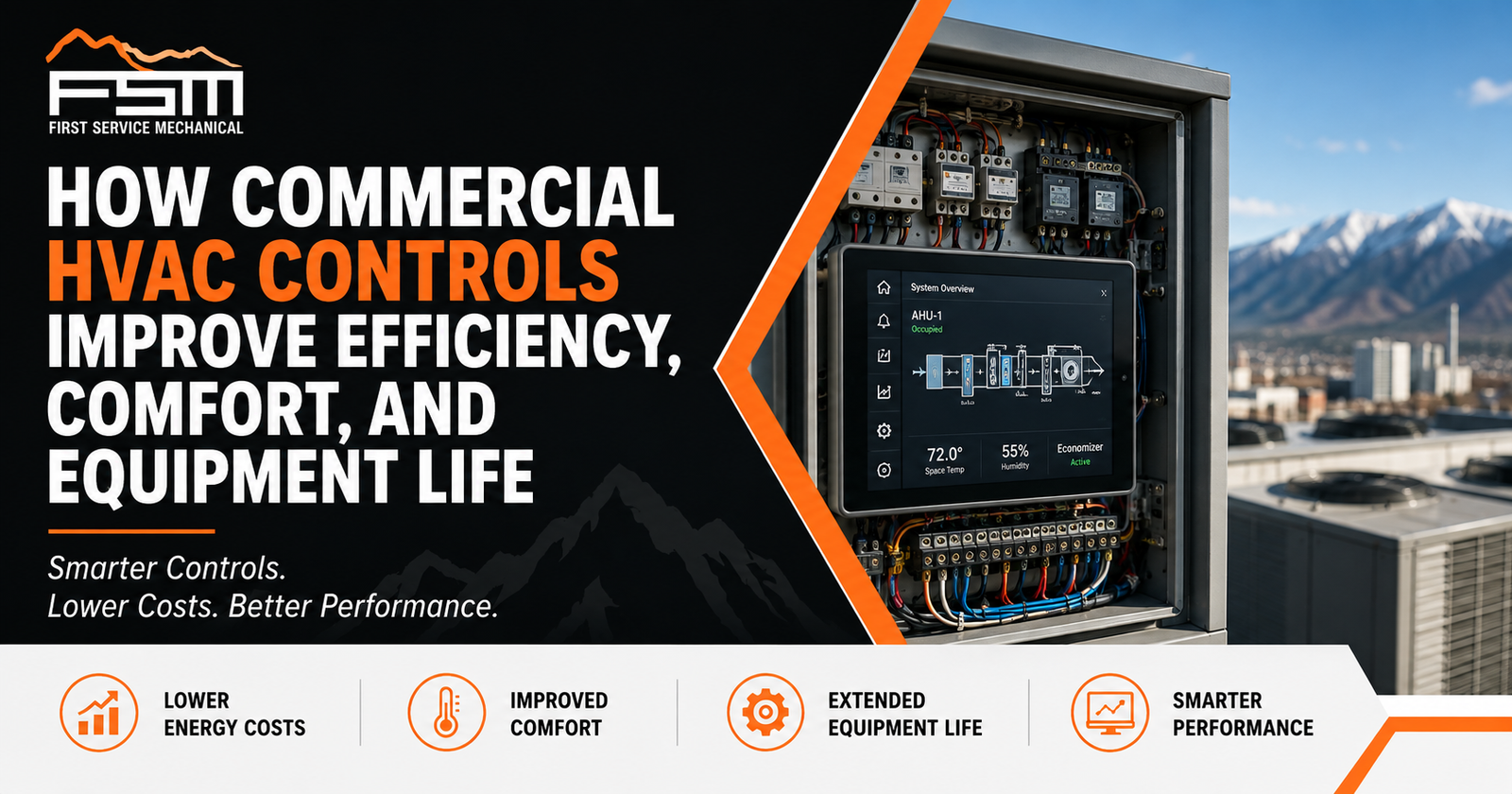
When a commercial HVAC system starts causing comfort complaints or energy bills begin climbing, many facility managers assume it’s time to replace aging equipment. While older systems can certainly contribute to inefficiency, the issue often lies somewhere less obvious: the HVAC controls.
Commercial HVAC controls determine when equipment operates, how hard it works, and how different components communicate with one another. Even a high-quality rooftop unit, chiller, or boiler cannot perform efficiently if the controls are outdated, improperly programmed, or no longer aligned with how the building is used.
For many commercial facilities, optimizing HVAC controls can improve comfort, reduce operating costs, and extend equipment life without the expense of a complete system replacement.
What Are Commercial HVAC Controls?
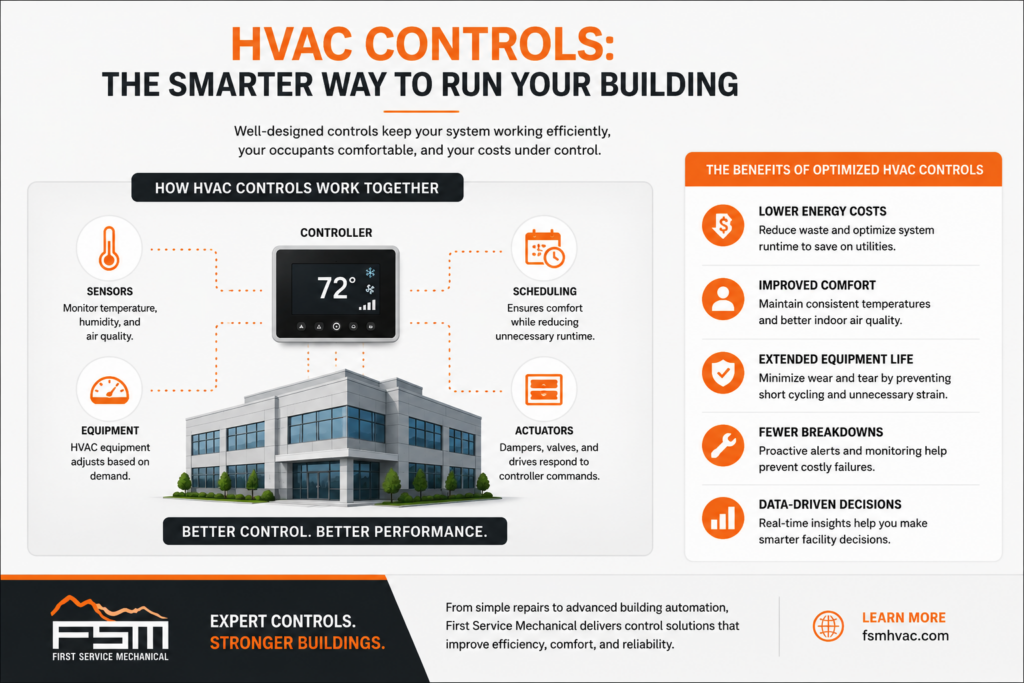
HVAC controls are the hardware and software that manage heating, cooling, ventilation, and indoor air quality throughout a building. They continuously monitor conditions and adjust equipment to maintain comfortable temperatures while using energy efficiently.
A commercial control system may include:
- Temperature and humidity sensors
- Thermostats
- Programmable controllers
- Variable frequency drives (VFDs)
- Dampers and actuators
- Scheduling software
- Building automation system (BAS) integration
These components work together to ensure equipment operates only when needed and under the appropriate conditions.
Signs Your HVAC Controls Need Attention
Control problems often develop gradually, making them easy to overlook. Instead of causing a complete system failure, they slowly reduce efficiency and create inconsistent performance.
Some common warning signs include:
Increasing Energy Bills
If utility costs continue rising despite routine maintenance, your HVAC controls may be operating equipment longer than necessary or running systems simultaneously.
Hot and Cold Spots
Uneven temperatures throughout the building often indicate that sensors, dampers, or control sequences are no longer functioning correctly.
Equipment Runs After Hours
Buildings frequently operate on different schedules than they did a few years ago. If controls haven’t been updated, HVAC equipment may continue running overnight, on weekends, or during holidays.
Frequent Cycling
Systems that constantly start and stop experience unnecessary wear. Improper programming or faulty sensors can cause short cycling that reduces efficiency and shortens equipment life.
Employee Comfort Complaints
When occupants frequently adjust thermostats or report uncomfortable temperatures, the issue may stem from the control strategy rather than the equipment itself.
Common HVAC Control Problems
Over time, even well-designed control systems require adjustments. Building occupancy changes, equipment is upgraded, and operational needs evolve.
Some of the most common issues include:
- Failed or inaccurate temperature sensors
- Outdated programming
- Incorrect occupancy schedules
- Manual overrides left in place after service
- Communication failures between control devices
- Equipment operating out of sequence
- Improper calibration
Many of these problems remain unnoticed because the HVAC system continues operating, just not as efficiently as intended.
How Optimized Controls Improve Building Performance
Improving HVAC controls benefits nearly every aspect of a commercial building’s operation.
Lower Energy Consumption
One of the biggest advantages is reducing unnecessary runtime. Proper scheduling, demand-based operation, and optimized control sequences help equipment consume less energy while maintaining occupant comfort.
Better Indoor Comfort
Consistent temperatures create a more productive environment for employees, customers, students, patients, and tenants. Properly functioning controls eliminate many of the hot and cold spots that frustrate building occupants.
Longer Equipment Life
Compressors, fans, pumps, and motors last longer when they operate under appropriate conditions. Eliminating excessive cycling and unnecessary runtime reduces wear on expensive components.
Reduced Maintenance Costs
Equipment that operates efficiently generally experiences fewer unexpected breakdowns. Addressing control issues early can prevent mechanical failures that require costly emergency repairs.
Improved System Visibility
Modern controls and building automation systems provide valuable information about system performance, allowing facility managers to identify trends before they become major problems.
Why HVAC Controls Should Be Evaluated During Preventive Maintenance
Preventive maintenance is about more than changing filters and inspecting mechanical components. It is also an opportunity to verify that HVAC controls continue operating as intended.
During routine maintenance, technicians can evaluate:
- Temperature sensor accuracy
- Scheduling and occupancy settings
- Control sequences
- Communication between equipment
- Alarm histories
- System trends
- Overall control performance
Regular evaluations help identify small issues before they begin affecting comfort, energy usage, or equipment reliability.
When Is It Time to Upgrade Your Controls?
Not every building requires a complete control system replacement. However, there are situations where upgrading controls provides significant operational benefits.
You may want to consider a controls upgrade if:
- Your building has undergone renovations.
- Occupancy schedules have changed.
- Energy costs continue increasing.
- Comfort complaints are becoming more frequent.
- Existing controls are obsolete or unsupported.
- Equipment has recently been replaced.
- Your current system provides limited visibility into performance.
Modern control technologies often integrate with existing HVAC equipment, allowing businesses to improve efficiency without replacing every major component.
Partner with First Service Mechanical
Optimizing HVAC controls requires more than simply installing new hardware. Every building operates differently, and control strategies should reflect each facility’s occupancy, equipment, and operational goals.
First Service Mechanical helps commercial building owners and facility managers improve system performance through expert HVAC service, preventive maintenance, controls support, building automation solutions, and energy optimization. Whether you’re troubleshooting comfort issues, looking to reduce operating costs, or planning long-term facility improvements, their experienced team can evaluate your system and recommend practical solutions that fit your building.
Get More from Your Commercial HVAC System
Replacing HVAC equipment isn’t always the first—or best—solution. In many cases, optimizing the controls that manage your existing system can deliver meaningful improvements in efficiency, comfort, and reliability.
If your commercial building is experiencing rising energy costs, inconsistent temperatures, or increasing maintenance issues, it may be time to take a closer look at your HVAC controls. A professional evaluation can uncover opportunities to improve performance, extend equipment life, and help your facility operate more efficiently for years to come.

Leave a Reply