

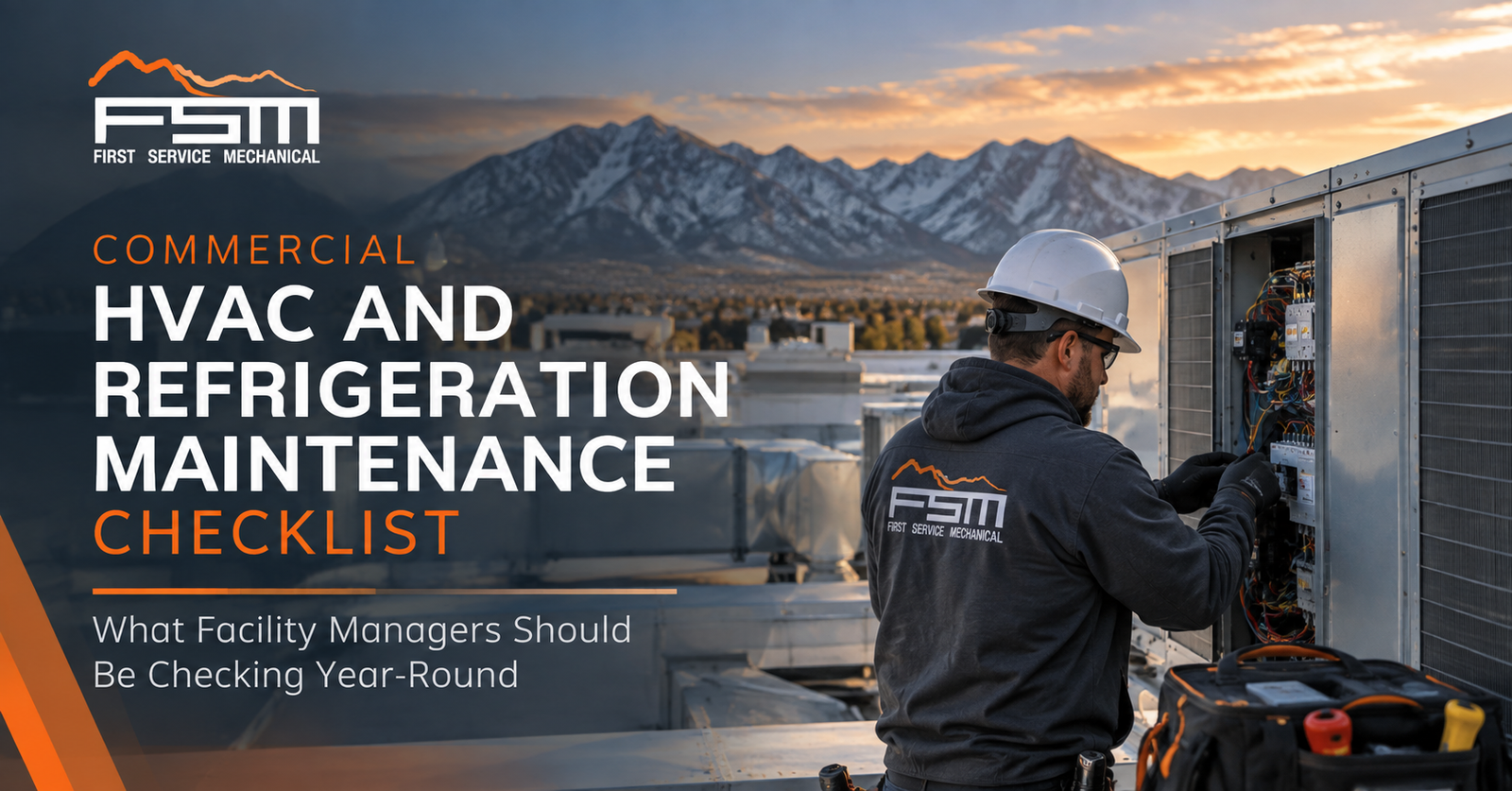
Commercial HVAC and refrigeration systems rarely fail without warning. In many cases, equipment begins showing signs of declining performance long before a complete breakdown occurs. The challenge for facility managers is recognizing those signs early enough to address them before they lead to downtime, higher operating costs, or emergency repairs.
A consistent commercial HVAC and refrigeration maintenance program can make that process easier. Instead of waiting for equipment problems to disrupt operations, facility managers can monitor system performance, address wear as it develops, and keep critical heating, cooling, and refrigeration equipment operating reliably throughout the year.
While every facility and mechanical system is different, there are several areas that should be part of a comprehensive maintenance strategy.
1. Inspect Commercial HVAC Equipment Regularly
Routine equipment inspections are the foundation of an effective commercial HVAC maintenance checklist.
Rooftop units, air handlers, chillers, boilers, make-up air systems, and other commercial equipment contain numerous components that experience wear during normal operation. Small problems with belts, motors, electrical connections, coils, or other components can eventually affect the performance of the entire system.
Regular inspections provide an opportunity to identify deteriorating components before they result in equipment failure.
For facilities relying heavily on rooftop equipment, maintenance becomes especially important because RTUs are exposed to changing weather conditions throughout the year. Facility managers experiencing recurring RTU problems may also want to review when to repair or replace a commercial rooftop HVAC unit.
2. Check Filters and Airflow
Airflow problems can affect comfort, energy consumption, and equipment performance.
Dirty filters restrict airflow and force HVAC equipment to work harder to maintain desired conditions. Over time, that additional workload can increase energy consumption and place unnecessary strain on fans, motors, and other components.
Filters should be inspected and replaced according to the facility’s operating environment and equipment requirements. Facilities with high dust levels, heavy occupancy, or demanding industrial processes may require more frequent attention.
Airflow issues can also originate elsewhere in the system. Dampers, ductwork, diffusers, fans, and controls should all work together to deliver conditioned air where it is needed.
3. Clean and Inspect Coils
Evaporator and condenser coils play an important role in transferring heat. When dirt and debris accumulate on coil surfaces, heat transfer becomes less effective.
The result can be longer equipment runtimes, reduced cooling capacity, higher energy consumption, and additional strain on compressors.
Coil inspection and cleaning should therefore be part of routine HVAC maintenance for commercial buildings. Keeping these components clean helps equipment transfer heat efficiently and supports overall system performance.
4. Monitor Refrigeration Equipment
Facilities with walk-in coolers, freezers, ice machines, or other temperature-sensitive equipment have another maintenance priority: refrigeration.
Commercial refrigeration maintenance should include regular evaluation of equipment performance, temperature consistency, coils, controls, electrical components, and other critical parts.
Even relatively small refrigeration problems can become significant when equipment is responsible for maintaining specific temperatures. Unusual temperature fluctuations, longer runtimes, ice buildup, unfamiliar noises, or equipment that cycles frequently may indicate that the system needs professional attention.
A proactive refrigeration preventative maintenance strategy allows technicians to investigate these warning signs before they develop into larger operational problems.
5. Watch Refrigerant and System Performance
Changes in refrigerant-related performance can affect both HVAC and refrigeration equipment.
Facility managers should pay attention to systems that suddenly struggle to maintain temperatures, operate significantly longer than normal, or experience noticeable changes in cooling capacity. These symptoms can have several causes and should be evaluated by a qualified commercial HVAC technician.
Tracking performance over time is particularly valuable. A gradual decline may not seem significant from one week to the next, but maintenance records can reveal patterns that would otherwise be difficult to recognize.
6. Inspect Electrical Components
Commercial HVAC and refrigeration systems rely on numerous electrical components, including wiring, contactors, relays, motors, capacitors, and control devices.
Loose connections or deteriorating components can lead to unreliable operation and unexpected equipment shutdowns.
Electrical inspection should be handled by qualified technicians as part of professional commercial HVAC service. Identifying worn or damaged components during scheduled maintenance can reduce the likelihood of discovering the problem during a busy workday or a period of extreme temperatures.
7. Don’t Overlook HVAC Controls
Mechanical equipment may be functioning correctly while the controls managing it are not.
Incorrect schedules, inaccurate sensors, outdated programming, communication problems, and improper control sequences can cause equipment to operate longer than necessary or fail to respond appropriately to building conditions.
That makes controls an important part of facility HVAC maintenance.
Facility managers should periodically verify operating schedules, temperature settings, sensors, alarms, and system sequences. First Service Mechanical discusses this in more detail in its guide to commercial HVAC controls and their impact on efficiency, comfort, and equipment life.
Controls should also be reevaluated when occupancy, facility layouts, equipment, or operating schedules change.
8. Pay Attention to Drainage and Condensate Systems
Drainage components can be easy to overlook because they are rarely the first thing facility managers think about when evaluating HVAC performance.
However, clogged condensate drains, damaged drain pans, and drainage problems can contribute to water accumulation, equipment issues, and damage around mechanical systems.
Routine maintenance should include checking condensate drainage and identifying blockages or deterioration before they become larger problems.
9. Track Changes in Energy Consumption
An HVAC system does not have to stop working to have a problem.
Sometimes the first indication of declining performance is higher energy consumption. Dirty coils, restricted airflow, control problems, aging components, and excessive equipment runtime can all contribute to inefficient operation.
Facility managers should compare utility usage with historical building performance while accounting for weather, occupancy, operating hours, and other changes.
Unexpected increases can provide an opportunity to investigate HVAC performance before a mechanical failure occurs.
10. Keep Detailed Maintenance Records
Documentation is one of the most valuable tools available to facility managers.
Maintenance records can track service dates, recurring problems, equipment condition, repairs, component replacements, and performance changes. Over time, that information provides a clearer picture of each piece of equipment.
For example, an RTU requiring increasingly frequent repairs may be approaching the point where replacement makes more financial sense. A refrigeration system experiencing repeated temperature problems may require a more comprehensive assessment.
Good records make those decisions easier because they replace guesswork with equipment history.
How Often Should Commercial HVAC and Refrigeration Equipment Be Maintained?
There is no single maintenance schedule that works for every commercial facility.
Equipment age, manufacturer recommendations, operating hours, environmental conditions, building use, and system type should all influence maintenance frequency. A commercial office building may have very different requirements from a manufacturing facility, healthcare environment, retail property, or facility operating low-temperature refrigeration.
That is why maintenance should be customized around the building rather than based on a generic schedule.
First Service Mechanical’s preventive maintenance services are designed around the condition, age, and operational requirements of each facility’s mechanical systems.
Build a Proactive Maintenance Strategy with First Service Mechanical
A checklist is useful, but effective commercial HVAC and refrigeration maintenance requires more than checking equipment periodically. Facility managers need a long-term strategy that considers equipment condition, building demands, system performance, efficiency, and future capital needs.
First Service Mechanical provides HVAC and refrigeration maintenance for commercial and industrial facilities throughout Utah. From rooftop HVAC equipment and controls to low-temperature refrigeration, walk-in boxes, ice machines, and other mechanical systems, FSM helps facility managers identify potential problems and keep critical equipment operating reliably.
Regular maintenance can also uncover opportunities to improve efficiency, correct performance issues, and plan for equipment repairs or replacements before they become emergencies. For a closer look at the financial benefits, read Why Preventative HVAC Maintenance Saves Commercial Buildings Thousands.
If your facility needs a more proactive approach to HVAC and refrigeration maintenance, contact First Service Mechanical to discuss your equipment, operational needs, and long-term maintenance goals.

Leave a Reply