

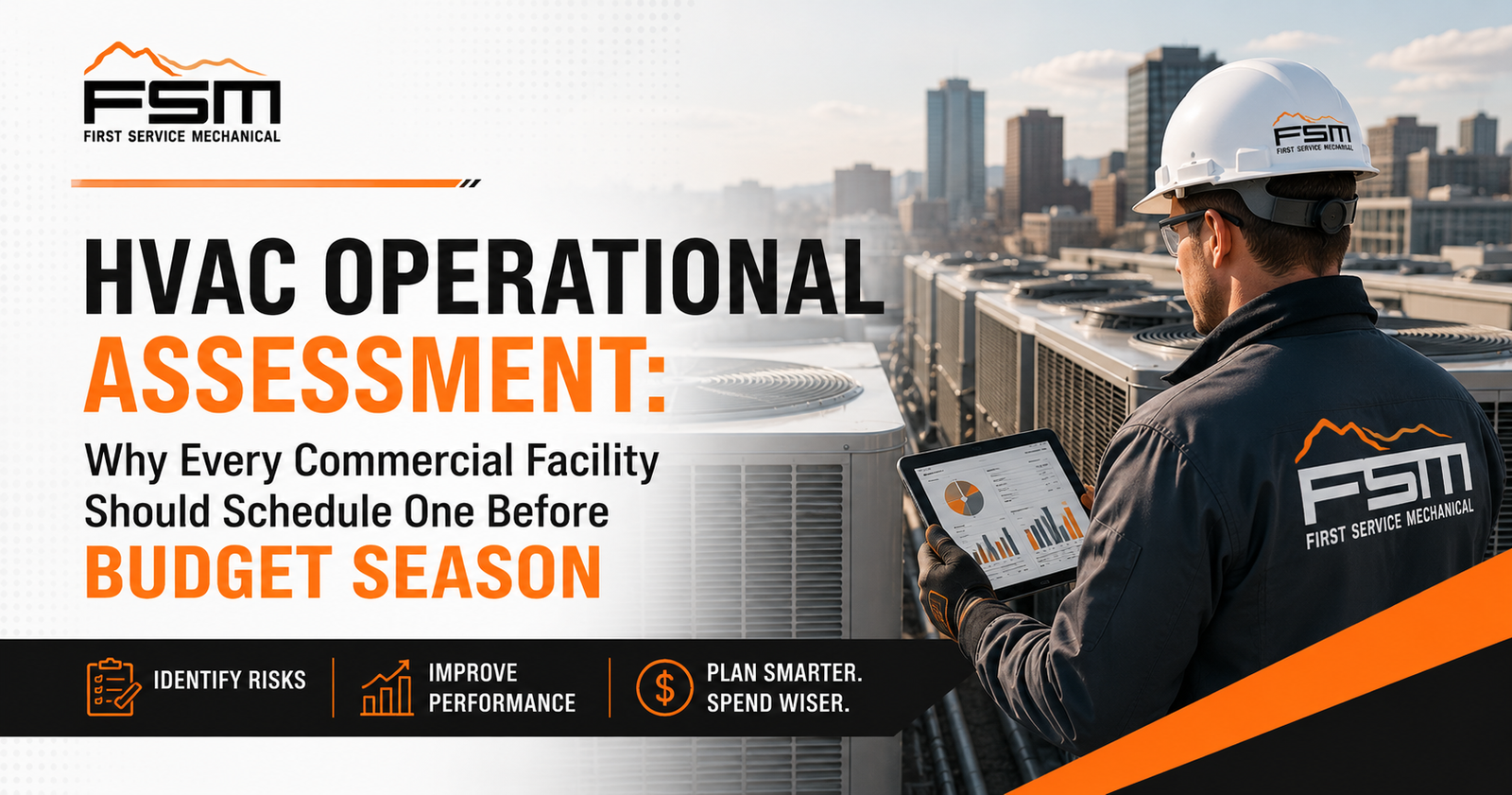
For many commercial organizations, budget season is when major decisions are made about facility improvements, equipment replacements, and operational spending for the year ahead. Yet one critical step is often overlooked: understanding the actual condition of the building’s HVAC systems before those financial decisions are finalized.
Without accurate information, budgets are often based on assumptions instead of facts. Equipment that appears to be functioning normally may have hidden issues, while other systems may have years of reliable service remaining despite their age. An HVAC operational assessment provides facility managers and business owners with the data they need to make informed decisions instead of reacting to unexpected failures throughout the year.
Whether you manage an office building, healthcare facility, school, manufacturing plant, or commercial property, an HVAC operational assessment can help you reduce risk, improve budgeting accuracy, and maximize the value of every maintenance and capital dollar.
What Is an HVAC Operational Assessment?
An HVAC operational assessment is a comprehensive evaluation of your building’s heating, ventilation, and air conditioning systems. Rather than focusing on a single repair or routine maintenance visit, an assessment examines the overall health, performance, efficiency, and reliability of your mechanical equipment.
The goal is to identify existing issues, uncover hidden risks, and create a roadmap for future maintenance and capital improvements.
A thorough assessment may include:
- Evaluating the condition of major HVAC equipment
- Reviewing system performance and efficiency
- Identifying aging or underperforming assets
- Detecting potential single points of failure
- Assessing maintenance history
- Reviewing control systems and automation
- Prioritizing repair and replacement recommendations
Instead of asking, “What needs fixing today?” an operational assessment answers a much more valuable question:
“What should we plan for over the next several years?”
Why Budgeting Without an Assessment Can Be Expensive
Many organizations build facility budgets using previous spending patterns or equipment age alone. While historical data has value, it doesn’t always reflect the current condition of mechanical systems.
This often leads to two costly mistakes.
Replacing Equipment Too Soon
Older equipment isn’t always equipment that needs replacing. Many commercial HVAC systems continue operating reliably with proper maintenance and targeted upgrades.
Replacing functioning equipment prematurely ties up capital that could be invested elsewhere.
Waiting Too Long to Replace Critical Systems
On the other hand, equipment that appears to be operating normally may already be showing signs of declining reliability. Without a professional assessment, organizations often discover these problems only after an unexpected breakdown disrupts operations.
Emergency replacements are almost always more expensive than planned projects.
Identify Hidden Risks Before They Become Emergencies
Not every HVAC problem is immediately visible.
An operational assessment helps uncover issues that may not be detected during routine maintenance, including:
- Components nearing failure
- Declining system efficiency
- Improper airflow
- Control system issues
- Deferred maintenance concerns
- Equipment operating outside recommended parameters
Identifying these risks early allows facility managers to schedule repairs on their own timeline instead of responding to emergency service calls.
For organizations where downtime affects productivity, customer experience, or occupant safety, that proactive approach can significantly reduce operational risk.
Build a Smarter Capital Improvement Plan
One of the greatest advantages of an HVAC operational assessment is improved capital planning.
Rather than replacing equipment based solely on age, organizations receive recommendations based on actual condition, expected remaining life, and operational impact.
This allows facility managers to prioritize investments based on factors such as:
- Business risk
- Energy savings potential
- Repair history
- Equipment reliability
- Occupant comfort
- Return on investment
Instead of facing multiple unexpected replacement projects in one year, organizations can spread investments across several budget cycles.
The result is a more predictable financial strategy with fewer surprises.
Improve Energy Performance
Older or poorly performing HVAC equipment often consumes more energy than necessary.
An assessment can identify opportunities to improve efficiency without immediately replacing every piece of equipment.
Recommendations may include:
- Adjusting control sequences
- Improving airflow
- Repairing mechanical deficiencies
- Upgrading aging components
- Optimizing scheduling
- Identifying systems that would benefit from modernization
Even relatively small improvements can lower utility costs while helping equipment operate more effectively.
Support Long-Term Facility Planning
Commercial buildings are long-term investments, and facility planning should extend well beyond the next maintenance visit.
An HVAC operational assessment provides valuable documentation that supports future planning by establishing a clear understanding of system condition today.
Facility managers can use this information to:
- Develop multi-year maintenance strategies
- Forecast future capital expenses
- Prioritize building improvements
- Support executive budget discussions
- Create more accurate reserve planning
Instead of reacting to equipment failures as they occur, organizations gain a proactive roadmap for maintaining reliable building operations.
Reduce Business Disruptions
Unexpected HVAC failures rarely happen at convenient times.
A failed rooftop unit during peak summer temperatures or a heating system outage during winter can interrupt operations, reduce employee productivity, affect customer satisfaction, and even force temporary closures in some facilities.
Operational assessments help reduce these disruptions by identifying equipment that presents the highest operational risk before failure occurs.
Planned maintenance and scheduled replacements are almost always less disruptive and less expensive than emergency repairs.
Better Information Leads to Better Decisions
One of the most valuable outcomes of an HVAC operational assessment isn’t just identifying problems—it’s improving decision-making.
With objective data about equipment condition and performance, organizations can confidently answer questions like:
- Which systems should be replaced first?
- Which assets still have useful life remaining?
- Where should next year’s capital budget be invested?
- Which repairs will provide the greatest return?
- How can we reduce future operating costs?
Rather than relying on assumptions, facility leaders can make decisions supported by real operational data.
Don’t Wait Until Equipment Fails
Many organizations schedule an assessment only after experiencing repeated equipment failures or rising maintenance costs. By that point, the opportunity to proactively manage risk has often passed.
Conducting an HVAC operational assessment before budget season allows businesses to identify priorities, avoid costly surprises, and create a strategic plan for future investments.
Whether your facility is several years old or has decades of service behind it, understanding the condition of your HVAC systems is one of the smartest investments you can make. With accurate information, you’ll be better equipped to improve reliability, control costs, and ensure your building continues supporting your operations for years to come. Contact us today!

Leave a Reply