

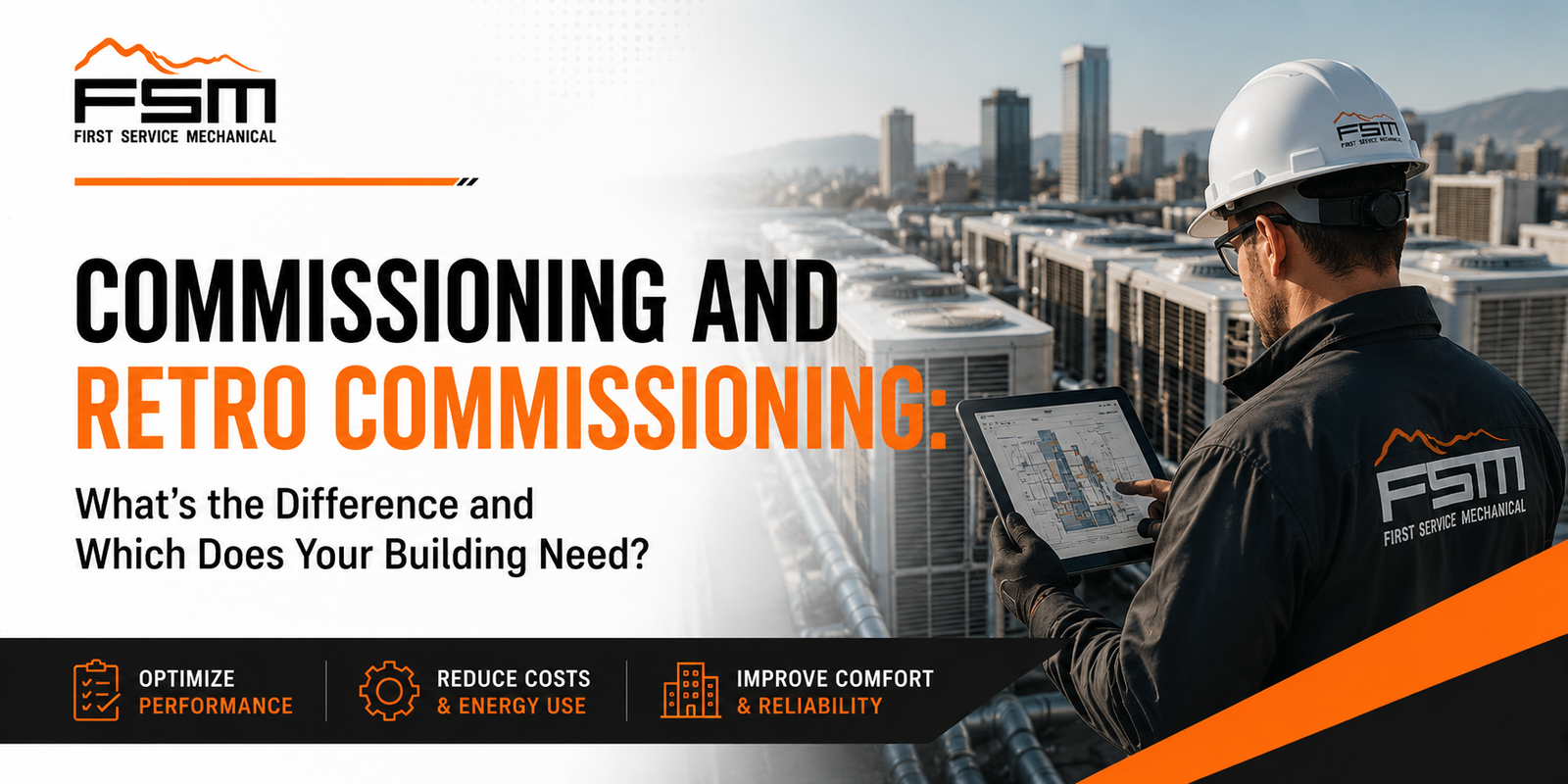
When a commercial HVAC system is installed, most building owners expect it to operate efficiently for years to come. However, even the best-designed systems can experience performance issues over time due to changing building needs, equipment wear, control adjustments, or renovations. Without proper evaluation, these changes can lead to higher energy costs, inconsistent temperatures, and unnecessary strain on HVAC equipment.
That’s where commissioning and retro commissioning come in.
Although these terms are often used interchangeably, they serve different purposes depending on the age of your building and the condition of its systems. Understanding the difference can help facility managers, property owners, and building operators make informed decisions that improve efficiency, comfort, and long-term operating costs.
Here’s what you need to know.
What Is HVAC Commissioning?
HVAC commissioning is a quality assurance process performed during the construction of a new building or after a major HVAC installation. The goal is to verify that every system has been designed, installed, programmed, and tested according to the owner’s project requirements.
Rather than simply turning equipment on and assuming everything works correctly, commissioning involves a thorough review of the entire HVAC system.
A commissioning process may include:
- Verifying equipment installation
- Testing heating and cooling performance
- Confirming proper airflow throughout the building
- Calibrating sensors and thermostats
- Programming and testing building automation systems
- Checking ventilation rates
- Reviewing documentation and operating procedures
The result is a building that performs as intended from day one, helping owners avoid costly operational issues after occupancy.
What Is Retro Commissioning?
Retro commissioning applies many of the same principles to buildings that have already been operating for several years but were never formally commissioned.
Over time, HVAC systems naturally drift away from optimal performance. Dampers become stuck, sensors lose calibration, schedules change, controls are overridden, and equipment operates differently than originally intended. Even small issues can add up to significant inefficiencies across an entire facility.
Retro commissioning identifies these hidden problems and restores system performance without necessarily replacing major equipment.
The process often uncovers issues such as:
- Simultaneous heating and cooling
- Improper equipment scheduling
- Incorrect airflow
- Faulty sensors
- Building automation programming errors
- Excessive energy consumption
- Poor indoor comfort
By correcting these issues, building owners can often improve efficiency and occupant comfort while extending the life of existing HVAC equipment.
What Is Recommissioning?
Recommissioning falls somewhere between commissioning and retro commissioning.
Unlike retro commissioning, recommissioning is performed on buildings that were properly commissioned when they were originally built. Its purpose is to verify that the systems continue operating as intended after years of use.
Many organizations schedule recommissioning every few years as part of their facility management strategy, especially after:
- Building renovations
- Occupancy changes
- Equipment replacements
- Building automation upgrades
- Significant maintenance projects
Regular recommissioning helps maintain the performance originally achieved during construction.
Commissioning vs. Retro Commissioning
While both processes improve HVAC performance, they are designed for different situations.
| Commissioning | Retro Commissioning |
|---|---|
| Performed on new construction or newly installed systems | Performed on existing buildings |
| Ensures systems operate as designed before occupancy | Restores performance after years of operation |
| Focuses on proper installation and startup | Focuses on correcting operational inefficiencies |
| Prevents future problems | Identifies existing hidden problems |
| Supports successful project completion | Improves efficiency without major equipment replacement |
The right choice depends on where your facility is in its lifecycle.
Signs Your Building May Need Retro Commissioning
Many building owners assume rising energy costs automatically mean it’s time to replace HVAC equipment. In reality, many issues stem from operational inefficiencies rather than equipment failure.
Your facility may benefit from retro commissioning if you notice:
Rising Utility Bills
If energy costs continue increasing without major changes in occupancy or utility rates, your HVAC system may not be operating efficiently.
Inconsistent Temperatures
Hot and cold spots often indicate airflow issues, control problems, or improperly balanced systems.
Frequent Comfort Complaints
Employees, tenants, or customers who regularly complain about indoor temperatures may be experiencing problems that aren’t obvious during routine maintenance.
Building Automation Issues
As control systems evolve, programming changes or overrides can cause equipment to run longer than necessary or operate inefficiently.
Equipment Running Constantly
HVAC systems that rarely cycle off or operate outside scheduled hours can waste significant energy.
Deferred Maintenance
Facilities that have postponed maintenance or undergone multiple repairs over the years often accumulate small issues that reduce overall system performance.
The Benefits Go Beyond Energy Savings
Lower utility bills are often the first benefit people associate with commissioning and retro commissioning, but the value extends much further.
Improved Occupant Comfort
Maintaining consistent temperatures and proper ventilation creates a more comfortable environment for employees, tenants, customers, patients, and visitors.
Longer Equipment Life
When HVAC equipment operates efficiently, components experience less unnecessary wear, helping extend the lifespan of major assets.
Reduced Maintenance Costs
Identifying and correcting operational issues early can reduce emergency service calls and prevent minor problems from becoming expensive repairs.
Better Indoor Air Quality
Proper airflow, ventilation, and balanced systems help support healthier indoor environments while ensuring spaces receive the fresh air they need.
Increased Operational Efficiency
Building operators gain greater visibility into how systems perform, allowing them to make smarter maintenance and budgeting decisions.
Better Return on Capital Investments
Before investing in expensive equipment replacements, retro commissioning may reveal opportunities to improve existing systems at a much lower cost.
Why Commissioning Should Be Part of Your Facility Strategy
Many organizations think of commissioning as a one-time project completed during construction. In reality, building performance should be evaluated throughout the facility’s lifecycle.
As buildings evolve, so do their HVAC demands.
Office layouts change. Occupancy fluctuates. Technology advances. Building automation systems receive updates. Equipment ages.
Without periodic evaluations, even well-maintained systems can gradually lose efficiency.
Including commissioning or retro commissioning as part of a long-term facility management plan helps ensure your HVAC system continues supporting your operational goals while controlling energy and maintenance costs.
How First Service Mechanical Can Help
At First Service Mechanical, commissioning and retro commissioning are part of a comprehensive approach to optimizing commercial HVAC performance.
Whether you’re preparing a newly constructed building for occupancy or improving the efficiency of an existing facility, our experienced team works to identify opportunities for better system performance, improved occupant comfort, and lower operating costs.
Our commercial services include:
- HVAC operational assessments
- Air balancing
- Building automation and controls
- Preventive maintenance
- Energy efficiency optimization
- Commercial HVAC repair and replacement
- Mechanical system evaluations
By combining technical expertise with a thorough understanding of commercial mechanical systems, we help facility managers make informed decisions that support both immediate performance and long-term reliability.
Keep Your Building Performing at Its Best
Every commercial building is different, and so are its HVAC challenges. Whether you’re overseeing a newly constructed facility or managing a building that’s been operating for decades, understanding the differences between commissioning and retro commissioning can help you choose the right path toward improved performance.
If your building is experiencing rising energy costs, inconsistent comfort, or unexplained HVAC issues, a professional evaluation may uncover opportunities to improve efficiency without major equipment replacements.
The team at First Service Mechanical provides the expertise and commercial HVAC solutions needed to keep your building operating safely, efficiently, and reliably for years to come.

Leave a Reply