

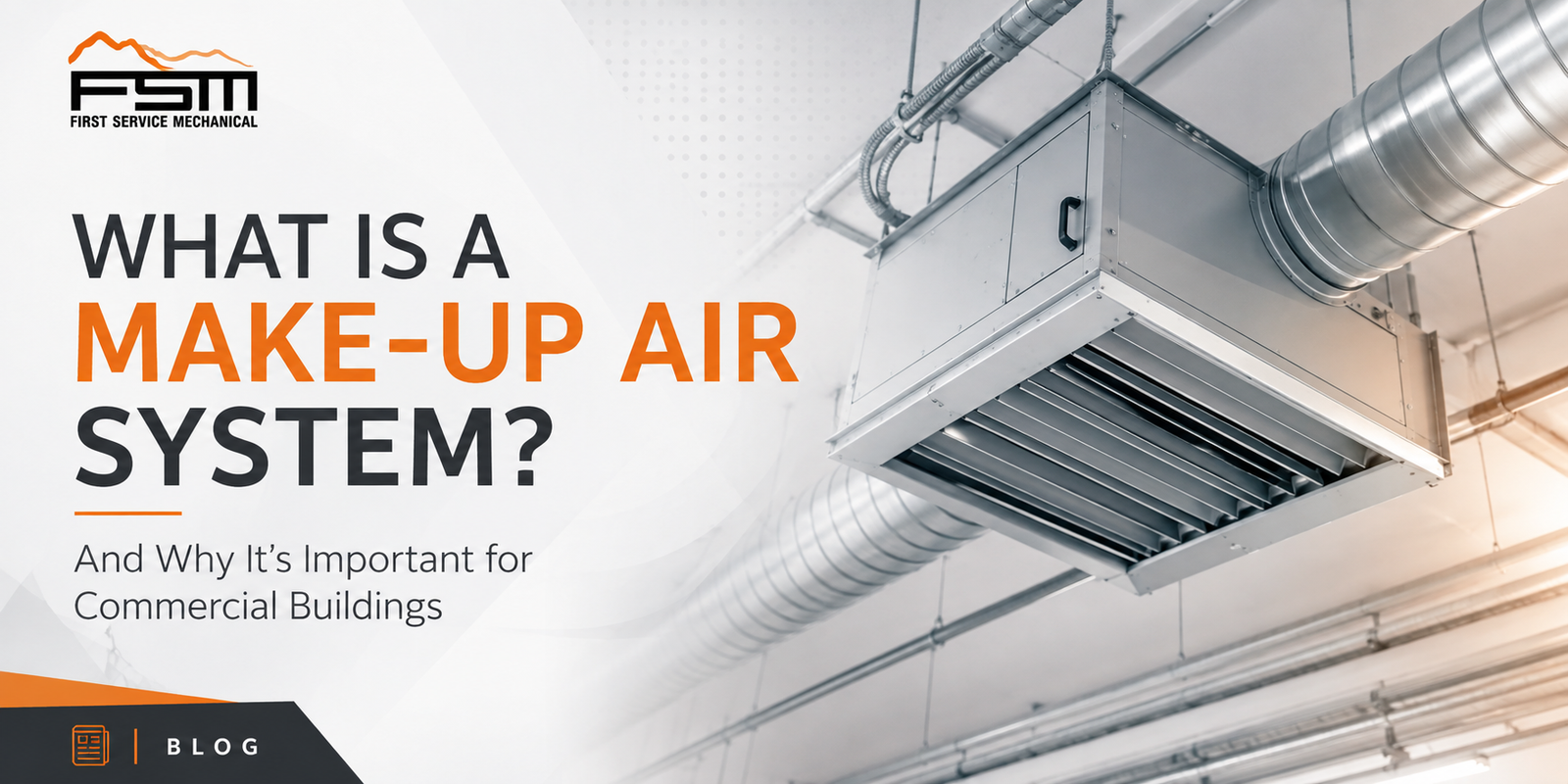
Commercial buildings constantly move air in and out. Exhaust fans remove stale air, kitchen hoods pull out heat and odors, restrooms require ventilation, and industrial processes may exhaust large volumes of air throughout the day. While removing unwanted air is necessary, that air also needs to be replaced.
That is where a make-up air system comes in.
A properly designed make-up air system replaces air that has been exhausted from a building, helping maintain balanced pressure, comfortable indoor conditions, and effective ventilation. For facility managers and building owners, understanding how these systems work can help prevent comfort problems, energy waste, and unnecessary strain on HVAC equipment.
What Is a Make-Up Air System?
A make-up air system, sometimes called an MUA system, introduces fresh outdoor air into a building to replace air removed by exhaust systems.
Consider a commercial kitchen with a large exhaust hood. As the hood removes air from the kitchen, an equal or appropriate amount of replacement air needs to enter the building. Without a controlled source of replacement air, the building will attempt to pull it in through doors, windows, cracks, and other openings.
Make-up air systems provide a more controlled solution.
Depending on the building and application, make-up air may also be heated, cooled, filtered, or otherwise conditioned before entering the occupied space. This allows the building to replace exhausted air without creating significant temperature or comfort problems.
Why Do Commercial Buildings Need Make-Up Air?
Commercial facilities can exhaust significant amounts of indoor air during normal operation. Common sources include:
- Commercial kitchen exhaust hoods
- Restroom exhaust fans
- Manufacturing and process exhaust
- Laundry exhaust systems
- Warehouse ventilation
- Laboratory exhaust
- Mechanical ventilation systems
When large amounts of air leave a building without being adequately replaced, the building can develop negative air pressure.
Negative pressure means the air pressure inside the building is lower than the pressure outside. As a result, outdoor air gets pulled into the facility wherever it can find an opening.
A properly functioning make-up air system helps manage this process by intentionally introducing replacement air where and when it is needed.
Signs Your Building May Have Negative Air Pressure
Building pressure problems are not always immediately obvious. In some cases, facility managers may initially assume they are dealing with an HVAC, door, or comfort issue.
Common signs of excessive negative pressure can include doors that are unusually difficult to open, drafts near entrances, inconsistent indoor temperatures, and outdoor air being pulled through gaps around doors or windows.
Occupants may also notice certain areas that never seem comfortable, even when thermostats appear to be set correctly.
Pressure issues can also interfere with exhaust system performance and potentially contribute to indoor air quality concerns. Identifying the underlying airflow imbalance is important before making adjustments to other HVAC components.
Make-Up Air and Indoor Comfort
Introducing outdoor air into a commercial building presents another challenge: outdoor conditions are rarely the same as indoor conditions.
During winter, incoming air may be extremely cold. During summer, it may be hot and humid. Bringing that air directly into occupied areas without properly conditioning it can create uncomfortable spaces and increase the workload on other HVAC equipment.
Many make-up air systems are designed to temper or condition incoming air before distributing it throughout the building.
The specific approach depends on the facility, climate, application, and existing mechanical systems. When properly designed and maintained, make-up air can help support more consistent temperatures while still providing the replacement air the building requires.
How Make-Up Air Affects HVAC Performance
Air balance can have a significant impact on overall HVAC performance.
When a building is consistently under negative pressure, heating and cooling equipment may have to compensate for uncontrolled outdoor air entering through doors and other openings. That can make maintaining indoor temperatures more difficult.
For example, cold outdoor air entering through multiple gaps during winter can create localized cold areas and increase heating demand. During warmer months, uncontrolled hot outdoor air can add additional cooling load.
A properly operating make-up air system gives facility managers greater control over where replacement air enters and how that air is treated.
Instead of allowing the building to pull outdoor air in unpredictably, replacement air becomes part of the overall mechanical system strategy.
Where Are Make-Up Air Systems Commonly Used?
Make-up air systems are used across many types of commercial and industrial facilities, particularly buildings with substantial exhaust requirements.
Restaurants and commercial kitchens are common examples because exhaust hoods can move large volumes of air. Manufacturing facilities may also require make-up air to replace air removed by process ventilation systems.
Other applications can include warehouses, healthcare facilities, laboratories, schools, retail buildings, and other commercial properties.
Every building is different. The amount of replacement air required depends on factors such as building size, exhaust equipment, occupancy, processes, existing HVAC equipment, and ventilation requirements.
This is why commercial airflow should be evaluated as a complete system rather than treating individual pieces of equipment independently.
Common Make-Up Air System Problems
Like other commercial mechanical equipment, make-up air systems require regular attention to perform properly.
Dirty filters can restrict airflow and reduce system performance. Belts, motors, fans, dampers, controls, and heating or cooling components can also develop problems over time.
Facility managers may notice reduced airflow, unusual noises, temperature inconsistencies, rising energy consumption, or new pressure-related problems around the building.
Changes elsewhere in the facility can also affect make-up air requirements. Adding exhaust equipment, modifying production areas, renovating spaces, or changing building usage can alter the balance between supply and exhaust airflow.
Even if the make-up air equipment itself has not changed, the building around it may have.
Why Air Balancing Matters
Installing make-up air equipment is only part of the solution. The system must work correctly alongside the rest of the building’s HVAC and exhaust equipment.
Air balancing helps verify that supply, return, exhaust, and make-up air quantities are working together as intended.
If exhaust volumes significantly exceed replacement air, negative pressure can develop. If too much replacement air is introduced, other pressure and comfort problems may occur.
Professional testing and balancing can help identify airflow discrepancies and determine whether adjustments are necessary.
For facilities experiencing unexplained comfort issues, drafts, pressure problems, or inconsistent HVAC performance, evaluating overall airflow can provide valuable answers.
Maintaining Your Commercial Make-Up Air System
Preventive maintenance can help keep make-up air equipment operating reliably and identify developing problems before they cause disruptions.
Maintenance needs vary by equipment, but service may include checking filters, inspecting belts and motors, verifying fan operation, evaluating dampers and controls, inspecting heating or cooling components, and confirming proper airflow.
Facility managers should also consider having their system evaluated after significant building changes. New walls, equipment, exhaust systems, or changes in occupancy can all affect the original airflow requirements.
Taking a proactive approach can help maintain comfort, support equipment performance, and reduce the likelihood of unexpected problems.
Keep Your Commercial Building’s Airflow in Balance
Make-up air may not be one of the most visible parts of a commercial HVAC system, but it can play an important role in how the entire building performs.
When exhaust air is properly replaced, facilities can maintain more stable building pressure, improve indoor comfort, support effective ventilation, and reduce uncontrolled outdoor air infiltration.
First Service Mechanical provides commercial HVAC and mechanical services for facilities with a wide range of equipment and operational requirements. From make-up air systems and air balancing to preventive maintenance, repairs, controls, and system optimization, our team can help keep your building’s mechanical systems working together effectively.
If you are experiencing airflow, pressure, ventilation, or comfort problems in your facility, contact First Service Mechanical to have your commercial HVAC system Contact Usevaluated.

Leave a Reply