

MRI machines are among the most sophisticated pieces of equipment in a healthcare facility. These imaging systems rely on powerful magnets, advanced electronics, and precisely controlled operating conditions to produce detailed diagnostic images. While the technology inside the scanner receives much of the attention, the cooling infrastructure supporting it is equally important to reliable operation.
Unlike conventional commercial HVAC systems designed primarily for occupant comfort, MRI cooling systems must meet specific equipment requirements. Even relatively small changes in cooling performance can trigger equipment alarms, interrupt imaging procedures, or affect the reliability of sensitive components.
For hospitals, outpatient imaging centers, and other healthcare facilities, understanding how MRI cooling works is an important part of protecting expensive equipment and maintaining dependable operations.
Why Do MRI Machines Need Specialized Cooling Systems?
MRI equipment generates substantial heat during operation. Components such as gradient amplifiers, radiofrequency electronics, and cooling compressors must operate within temperature limits established by the equipment manufacturer.
Many MRI systems use dedicated liquid cooling circuits to remove heat from these components. Depending on the scanner model, the cooling infrastructure may include chillers, heat exchangers, circulation pumps, piping, and specialized controls.
Superconducting MRI systems also use cryogenic technology to maintain extremely low magnet temperatures. The facility cooling system does not directly produce these cryogenic temperatures, but it may remove heat from equipment supporting that process.
This makes MRI cooling fundamentally different from ordinary building air conditioning. The system must deliver appropriate cooling capacity while maintaining the required fluid temperatures, flow rates, and operating stability.
Healthcare facilities need cooling solutions designed around their specific imaging equipment rather than general commercial HVAC assumptions.
How Do MRI Cooling Systems Work?
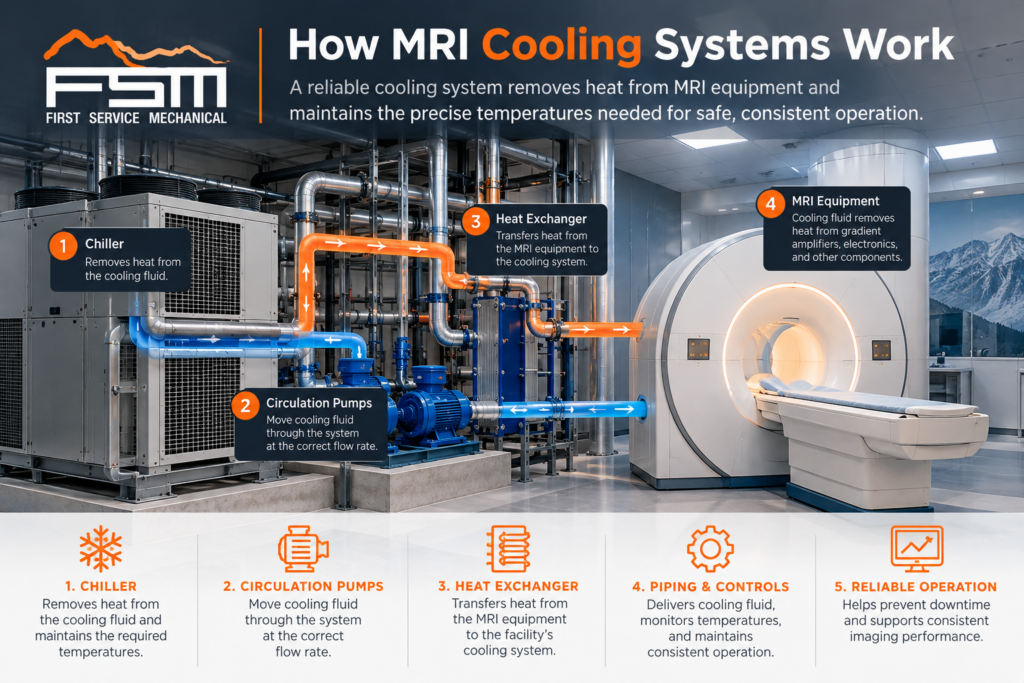
MRI cooling systems transfer heat away from temperature-sensitive equipment and release it through a dedicated cooling arrangement or an approved connection to the facility’s central cooling infrastructure.
A typical system may involve several interconnected components.
Chillers and heat exchangers: These components remove heat from the cooling circuit and help maintain the temperatures required by the MRI equipment.
Circulation pumps: Pumps move cooling fluid through the system at the appropriate flow rate, supporting consistent heat transfer.
Piping and distribution systems: Properly configured piping carries cooling fluid between the equipment and cooling infrastructure while minimizing unnecessary restrictions.
Temperature sensors and controls: Monitoring equipment tracks operating conditions and helps identify performance problems before they cause major disruptions.
Backup cooling arrangements: Depending on the installation, redundant equipment or alternative cooling connections may help maintain operations when the primary system becomes unavailable.
The exact configuration depends on the MRI manufacturer’s requirements, the facility layout, and the available mechanical infrastructure.
For facilities planning new installations or upgrades, experienced commercial HVAC professionals can help coordinate the supporting mechanical systems. First Service Mechanical provides HVAC systems and equipment services for specialized commercial applications, including MRI cooling systems.
What Happens When an MRI Cooling System Fails?
A cooling failure can affect much more than the temperature of an equipment room. Because MRI systems depend on controlled operating conditions, inadequate cooling can create operational and financial challenges.
Unexpected Equipment Downtime
When cooling temperatures or flow rates fall outside acceptable limits, an MRI scanner may generate alarms or suspend operation to protect its components.
Even a temporary interruption can delay scheduled procedures, disrupt patient appointments, and create additional work for healthcare staff.
Increased Risk of Equipment Problems
Repeated temperature fluctuations or inadequate heat removal can place additional stress on sensitive electronic components.
While modern MRI systems include protective monitoring and shutdown mechanisms, maintaining reliable cooling helps reduce avoidable operating problems.
Higher Maintenance and Repair Costs
Cooling problems that remain unresolved can contribute to equipment wear, recurring service calls, and unexpected repair expenses.
Issues involving pumps, valves, controls, or heat exchangers may also become more expensive when they are allowed to develop into larger mechanical failures.
Disruptions to Healthcare Operations
Imaging departments often operate on tightly coordinated schedules. When an MRI system becomes unavailable, the consequences can extend beyond the equipment itself.
Facilities may need to reschedule appointments, adjust staffing, or coordinate alternative imaging arrangements until the system returns to service.
For this reason, MRI cooling reliability should be treated as an important part of overall facility maintenance planning.
Common Problems Affecting MRI Cooling Performance
Although MRI cooling systems are designed for demanding applications, their mechanical components can experience many of the same issues found in other specialized cooling systems.
Common problems include:
- Inadequate coolant flow: Pump problems, restrictions, or improperly adjusted valves can reduce heat transfer.
- Temperature instability: Malfunctioning controls, insufficient capacity, or changing operating loads can affect cooling consistency.
- Heat exchanger fouling: Deposits and other buildup can reduce heat transfer efficiency.
- Leaks and fluid loss: Problems within the piping network can affect pressure, flow, and system reliability.
- Sensor or control failures: Incorrect readings or control problems may interfere with system operation.
- Insufficient backup capacity: Facilities without appropriate contingency arrangements may face longer interruptions during equipment failures.
Identifying these issues requires an understanding of both the mechanical cooling system and the MRI manufacturer’s operating specifications.
Because these systems support sensitive medical equipment, diagnosis and repairs should be coordinated with qualified mechanical professionals and the MRI equipment service provider.
Why Preventive Maintenance Is Important for MRI Cooling Systems
Preventive maintenance helps healthcare facilities identify developing mechanical problems before they interrupt imaging operations.
Unlike some commercial HVAC equipment that operates primarily during occupied hours, portions of an MRI cooling system may need to remain operational continuously, including when the scanner is not actively performing examinations.
A maintenance program should account for the equipment manufacturer’s requirements, operating conditions, and the critical nature of the installation.
Important maintenance considerations include monitoring cooling temperatures and flow rates, inspecting pumps and piping, evaluating heat exchanger performance, checking controls and alarms, and reviewing backup cooling arrangements.
Facilities should also maintain accurate service records to identify recurring problems and changes in system performance over time.
First Service Mechanical offers commercial HVAC maintenance services that help facility managers maintain dependable mechanical infrastructure and address equipment concerns proactively.
Planning MRI Cooling System Upgrades and Replacements
Healthcare facilities considering MRI equipment upgrades should evaluate the existing cooling infrastructure early in the planning process.
A replacement scanner may have different heat rejection requirements, cooling fluid specifications, or operating demands than the equipment previously installed.
Before proceeding with an upgrade, facility managers should coordinate with the MRI manufacturer and mechanical service professionals to determine whether existing chillers, pumps, piping, and controls can support the new equipment.
This evaluation can help identify necessary modifications, reduce installation delays, and prevent avoidable performance issues after commissioning.
In some situations, an HVAC retrofit may allow a facility to improve cooling reliability without replacing every component of its existing mechanical system.
Specialized MRI Cooling Services from First Service Mechanical
Reliable MRI cooling requires more than adequate cooling capacity. It depends on properly functioning mechanical equipment, consistent operating conditions, and maintenance practices that support the demanding requirements of healthcare environments.
First Service Mechanical provides commercial HVAC and specialized cooling services throughout Utah’s Wasatch Front, including Salt Lake City and surrounding communities.
From supporting MRI cooling infrastructure to servicing chillers, pumps, and related mechanical equipment, FSM helps facilities address performance concerns and maintain dependable operations.
If your healthcare facility is experiencing cooling problems, planning an MRI equipment upgrade, or evaluating its existing mechanical systems, contact First Service Mechanical to discuss your facility’s needs.

Leave a Reply