

For many commercial facilities, HVAC maintenance is easy to postpone when equipment appears to be operating normally. When budgets are tight and priorities compete for attention, preventive maintenance often gets pushed down the list. Unfortunately, delaying maintenance can create far greater expenses over time.
What seems like a short-term cost-saving measure often leads to higher energy bills, unexpected repairs, equipment failures, and shortened system life. Understanding the financial impact of deferred HVAC maintenance can help facility managers make more informed decisions about protecting their budgets and operations.
The Cost of Waiting Until Equipment Fails
Many HVAC issues begin as small problems that are inexpensive to correct. Dirty coils, worn belts, clogged filters, and loose electrical connections may not immediately affect system performance, but they can place additional strain on equipment over time.
Without regular inspections, these minor issues can develop into major repairs that require emergency service, replacement parts, and unexpected downtime. In many cases, the cost of addressing a problem early is significantly lower than the cost of repairing a failed system.
Increased Energy Consumption Adds Up
Commercial HVAC systems are among the largest energy consumers in most facilities. When equipment is not properly maintained, efficiency begins to decline.
Dirty filters restrict airflow. Fouled coils reduce heat transfer. Components that are out of calibration force equipment to work harder than necessary to maintain comfortable temperatures.
As efficiency decreases, utility costs increase. While these increases may seem gradual, they can add up substantially throughout the year. Facilities may spend thousands of dollars more on energy simply because equipment is operating below its optimal performance level.
Emergency Repairs Are More Expensive
Unexpected HVAC failures rarely happen at convenient times. Equipment breakdowns often occur during periods of peak demand when systems are under the greatest stress.
Emergency service calls typically involve additional costs compared to planned maintenance visits. Facilities may also face operational disruptions, uncomfortable building conditions, and lost productivity while repairs are being completed.
For facilities that serve customers, tenants, employees, or critical operations, even a short period without heating or cooling can have significant consequences.
Deferred Maintenance Shortens Equipment Lifespan
Commercial HVAC equipment represents a major capital investment. Most facility managers expect their systems to operate reliably for many years.
However, neglected equipment often wears out sooner than expected. Components that operate under increased stress experience greater wear and tear, leading to more frequent failures and premature replacement.
Replacing a commercial rooftop unit, chiller, boiler, or other major HVAC asset can require a substantial investment. Extending equipment life through routine maintenance can help delay these capital expenses and improve the overall return on investment.
Budget Predictability Matters
One of the biggest advantages of preventive maintenance is predictability.
Rather than reacting to unexpected failures, facility managers can plan maintenance activities, forecast expenses, and address developing issues before they become emergencies. This approach helps create more stable operating budgets and reduces the likelihood of costly surprises.
Regular assessments also provide valuable insight into equipment condition, allowing organizations to plan for future repairs or replacements instead of making rushed decisions during a breakdown.
Building a Smarter Maintenance Strategy
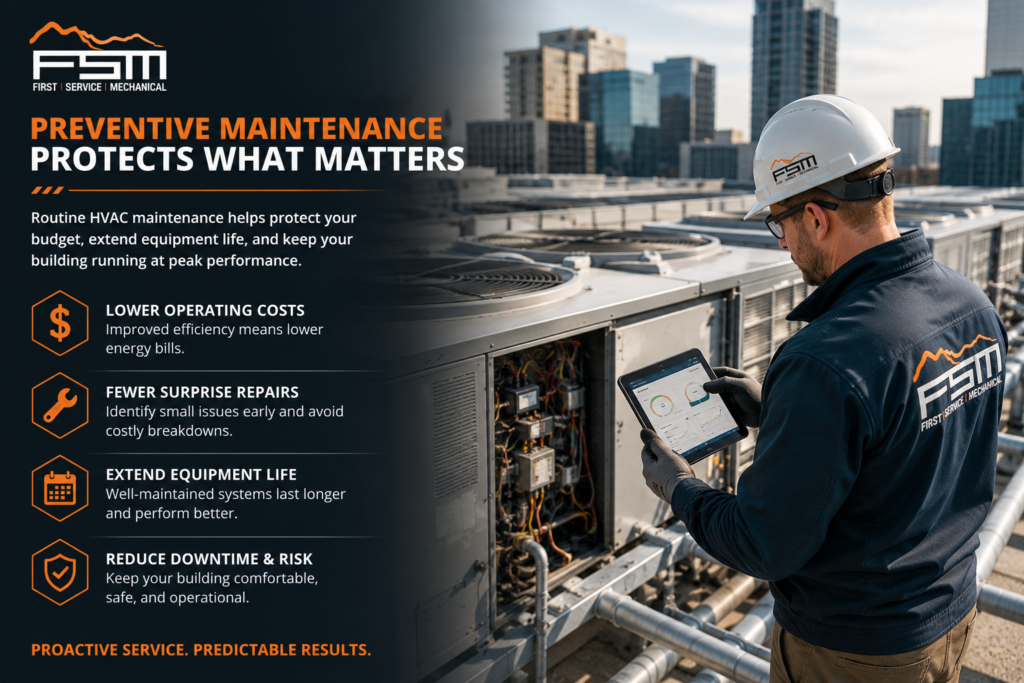
A proactive HVAC maintenance strategy helps facilities control costs while improving reliability and efficiency. Regular inspections, scheduled service, performance testing, and equipment assessments allow potential problems to be identified early and corrected before they affect operations.
The goal is not simply to maintain equipment. It is to protect facility performance, reduce risk, and maximize the value of HVAC investments.
Final Thoughts
Deferred HVAC maintenance may appear to reduce costs in the short term, but the long-term financial impact can be significant. Higher energy bills, emergency repairs, unexpected downtime, and premature equipment replacement all contribute to increased operating expenses.
By investing in preventive maintenance and routine system assessments, commercial facilities can improve reliability, extend equipment lifespan, and gain greater control over their budgets.
If you’re unsure about the current condition of your HVAC equipment, First Service Mechanical can help assess your systems and identify opportunities to improve performance, reduce risk, and support long-term operational goals. Contact us!

Leave a Reply