

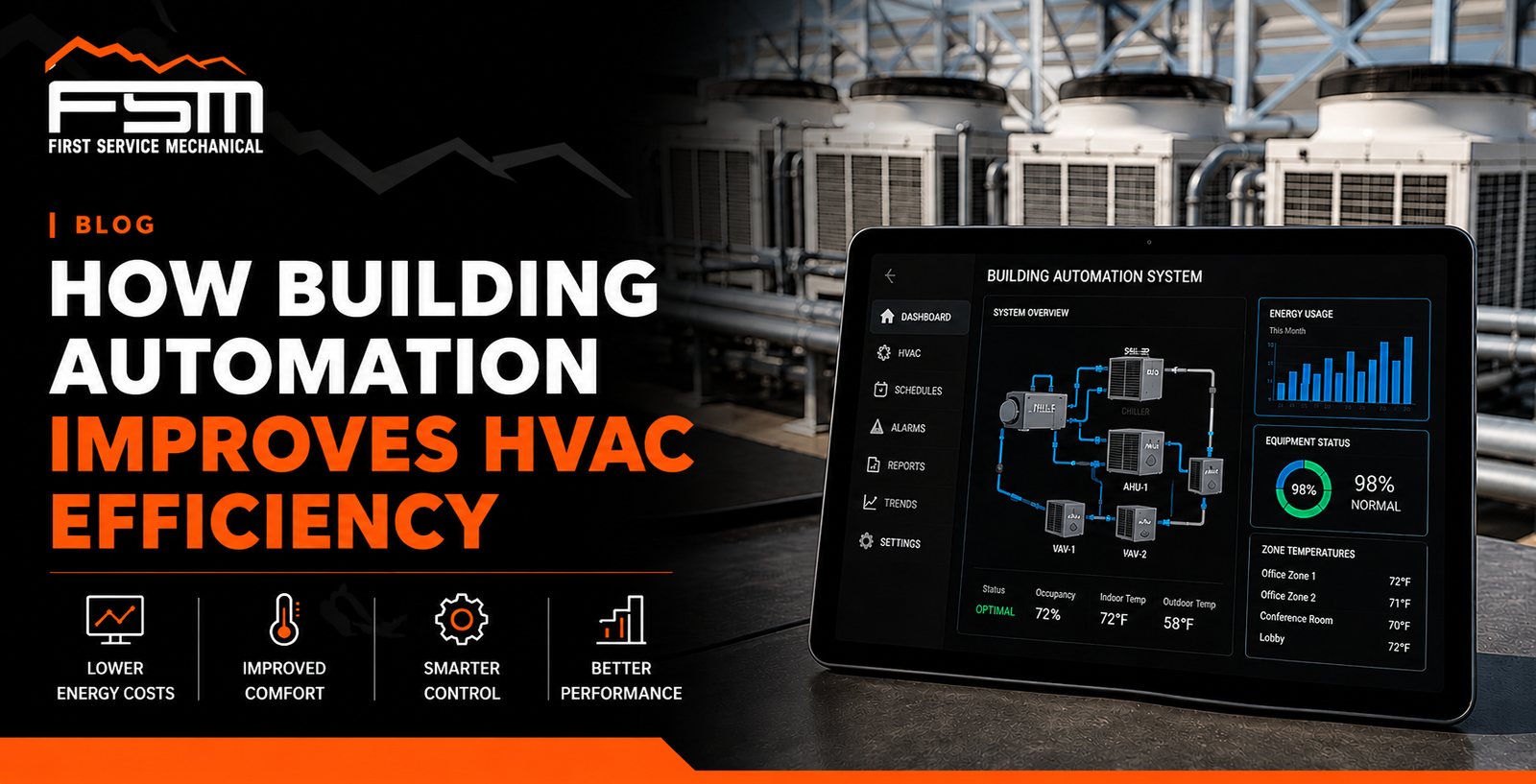
Managing a commercial building involves balancing occupant comfort, energy efficiency, and operating costs. As utility expenses continue to rise and building systems become more complex, many facility managers and property owners are looking for ways to improve performance without sacrificing comfort.
One of the most effective solutions is a Building Automation System (BAS). These systems give businesses greater control over their HVAC equipment, helping reduce energy consumption, improve reliability, and lower long-term operating expenses.
Whether you’re managing an office building, healthcare facility, manufacturing plant, or retail space, understanding how building automation works can help you make informed decisions about your HVAC infrastructure.
What Is a Building Automation System?
A Building Automation System is a centralized control system that monitors and manages various building functions, including heating, cooling, ventilation, lighting, and other mechanical systems.
Instead of relying on manual adjustments or standalone thermostats, a BAS uses sensors, controllers, and software to automatically regulate building performance based on real-time conditions.
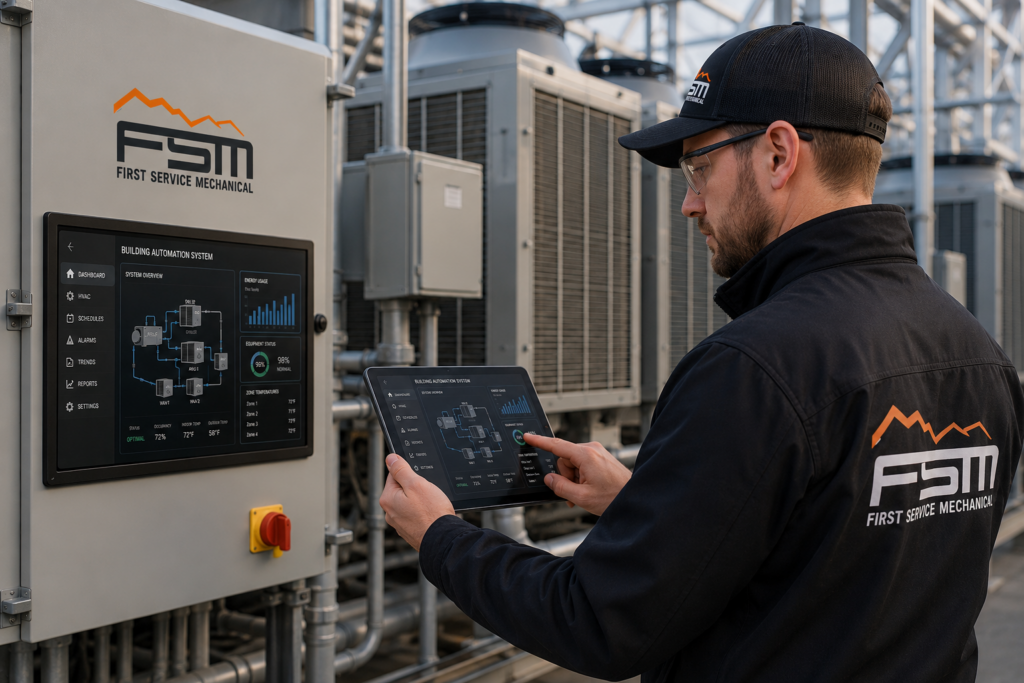
These systems continuously collect data from HVAC equipment and building environments, allowing operators to monitor performance, identify issues, and make adjustments from a single interface.
Modern building automation platforms can often be accessed remotely, providing facility managers with visibility and control even when they are off-site.
How Building Automation Systems Work with Commercial HVAC Equipment
Commercial HVAC systems are among the largest energy consumers in most buildings. Without proper controls, equipment may run longer than necessary, operate inefficiently, or struggle to maintain consistent temperatures.
A BAS helps coordinate HVAC equipment by monitoring factors such as:
- Indoor temperature
- Outdoor weather conditions
- Occupancy levels
- Humidity levels
- Equipment performance
- Energy consumption
Using this information, the system automatically adjusts HVAC operations to maintain comfort while minimizing unnecessary energy use.
For example, if a section of a building is unoccupied, the BAS can reduce heating or cooling in that area. If outdoor temperatures change dramatically, the system can adjust operations accordingly without requiring manual intervention.
This level of control helps businesses avoid wasted energy while maintaining a comfortable environment for occupants.
The Challenges of Manual HVAC Management
Many commercial buildings still rely on outdated controls or manual HVAC management practices. While these approaches may seem adequate, they often create hidden inefficiencies that increase operating costs over time.
Common challenges include:
Inconsistent Scheduling
HVAC systems may run during evenings, weekends, or holidays when buildings are largely unoccupied.
Equipment Overuse
Without automated controls, equipment may operate longer than necessary, increasing wear and shortening equipment lifespan.
Delayed Problem Detection
Facility managers may not notice developing issues until occupants complain or equipment experiences a breakdown.
Higher Utility Costs
Even small inefficiencies can add up significantly over the course of a year, especially in larger facilities.
Building automation helps address these challenges by continuously monitoring and optimizing system performance.
Five Ways Building Automation Improves HVAC Efficiency
1. Real-Time System Monitoring
One of the biggest advantages of a BAS is the ability to monitor HVAC equipment in real time.
Rather than waiting for equipment failures, facility managers can identify unusual operating conditions as they occur. This allows teams to address issues before they become major disruptions.
Real-time visibility can reveal problems such as:
- Excessive runtime
- Temperature inconsistencies
- Faulty sensors
- Airflow issues
- Equipment performance abnormalities
By identifying problems early, businesses can reduce downtime and avoid costly emergency repairs.
2. Occupancy-Based Scheduling
Many buildings waste energy by heating and cooling spaces that are not being used.
Building automation systems can create customized schedules based on occupancy patterns. Some systems even use occupancy sensors to adjust conditions automatically.
For example, conference rooms, training areas, and office spaces can receive conditioned air only when occupied. During evenings and weekends, the system can reduce energy usage while still maintaining safe operating conditions.
This targeted approach helps reduce unnecessary HVAC runtime and improve overall efficiency.
3. Energy Consumption Tracking
Without accurate data, it can be difficult to understand where energy dollars are being spent.
A BAS provides detailed reporting on HVAC energy usage, allowing building operators to identify trends and opportunities for improvement.
Facility managers can track:
- Peak energy demand
- Equipment efficiency
- Utility consumption patterns
- Seasonal performance changes
These insights help organizations make informed decisions regarding equipment upgrades, maintenance strategies, and energy-saving initiatives.
4. Predictive Maintenance Capabilities
Traditional HVAC maintenance often follows either a reactive or calendar-based approach.
Building automation allows organizations to move toward predictive maintenance.
By monitoring equipment performance continuously, the system can identify warning signs that indicate a potential issue. Alerts can notify maintenance personnel when equipment begins operating outside expected parameters.
Examples include:
- Rising motor temperatures
- Increased energy consumption
- Abnormal pressure readings
- Irregular airflow patterns
Addressing these issues early can help prevent costly breakdowns while extending equipment life.
5. Improved Comfort and Indoor Air Quality
Comfort plays a major role in occupant satisfaction and productivity.
A BAS helps maintain more consistent temperatures throughout the building by continuously adjusting HVAC performance based on real-time conditions.
Many systems also help improve indoor air quality by monitoring ventilation rates, humidity levels, and air circulation.
The result is a more comfortable environment for employees, customers, tenants, and visitors.
How Much Can Businesses Save?
The financial benefits of building automation can be significant.
While savings vary depending on building size, equipment condition, and operational practices, many organizations experience measurable reductions in energy consumption after implementing automation controls.
Energy savings often come from:
- Reduced equipment runtime
- Improved scheduling
- Faster issue detection
- Better temperature control
- Optimized ventilation strategies
In addition to lower utility bills, businesses may also see reduced maintenance expenses and longer equipment lifespans.
When viewed over several years, these savings can often offset the initial investment required for automation upgrades.
Signs It May Be Time to Upgrade Your Building Controls
Not every building requires a complete automation overhaul. However, certain warning signs may indicate that current controls are limiting HVAC performance.
Consider evaluating your building systems if you experience:
- Rising energy costs without a clear explanation
- Frequent HVAC service calls
- Inconsistent temperatures throughout the building
- Occupant comfort complaints
- Limited visibility into equipment performance
- Aging or outdated control systems
- Difficulty managing multiple building zones
If any of these challenges sound familiar, a professional HVAC assessment can help determine whether building automation could provide measurable benefits.
The Long-Term Value of Building Automation
As commercial buildings become increasingly focused on efficiency, sustainability, and operational performance, automation is becoming less of a luxury and more of a necessity.
Building automation systems provide organizations with greater visibility, smarter control, and better decision-making capabilities. By reducing wasted energy, improving maintenance strategies, and enhancing occupant comfort, these systems help businesses maximize the value of their HVAC investment.
For facility managers and building owners looking to control costs while improving performance, building automation represents one of the most effective tools available today.
Partner with First Service Mechanical
At First Service Mechanical, we help businesses optimize HVAC performance through expert assessments, maintenance strategies, and system improvements designed to increase efficiency and reliability.
Whether you’re evaluating your current building controls or looking for ways to reduce operating costs, our team can help identify opportunities to improve performance across your facility.
Contact First Service Mechanical today to learn how building automation and proactive HVAC management can support your long-term operational goals.

Leave a Reply