

If certain areas of your commercial building always feel too hot, too cold, or uncomfortable, your HVAC system may not be the problem. In many cases, the issue is improper airflow. That’s where commercial air balancing comes in.
HVAC air balancing is a specialized process that ensures conditioned air is distributed evenly throughout a building. When airflow is properly balanced, your HVAC system operates more efficiently, occupants stay comfortable, and equipment experiences less wear and tear. Whether you manage an office building, healthcare facility, school, manufacturing plant, or retail space, air balancing is an essential part of maintaining optimal building performance.
What Is Commercial Air Balancing?
Commercial air balancing, also known as Testing, Adjusting, and Balancing (TAB), is the process of measuring and adjusting airflow throughout a building to ensure every space receives the correct amount of conditioned air.
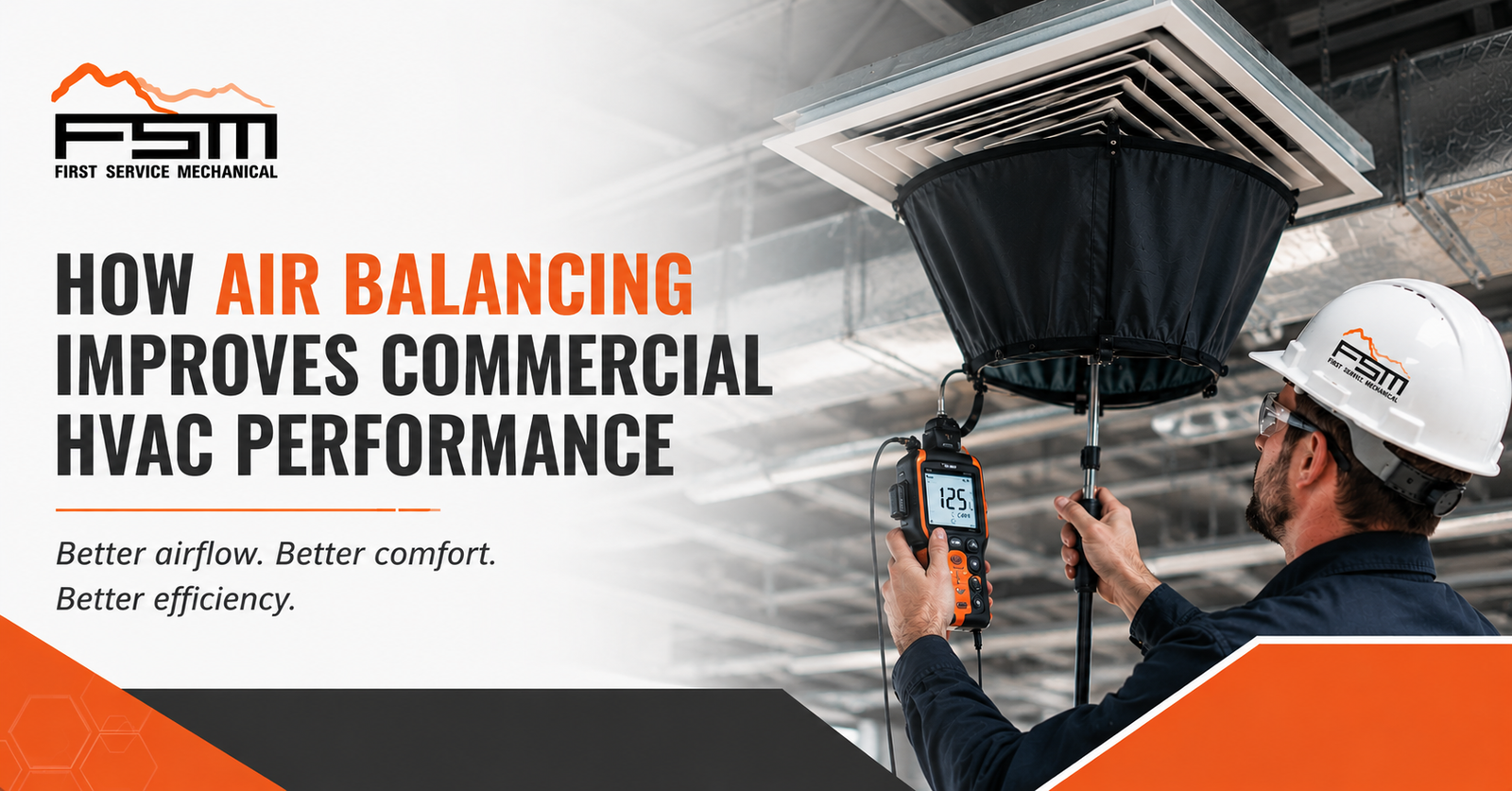
Certified technicians use specialized equipment to measure airflow at vents, ducts, and HVAC components. Based on these measurements, they adjust dampers, fan speeds, and system settings to match the building’s design specifications.
The goal is to create a system that delivers consistent temperatures, proper ventilation, and efficient HVAC performance across every occupied space.
Why Proper Air Balancing Matters
Even a well-maintained HVAC system can struggle if airflow is uneven. Over time, equipment changes, building renovations, occupancy shifts, and aging components can all affect how air moves through a building.
Proper HVAC air balancing helps correct these issues and provides several important benefits.
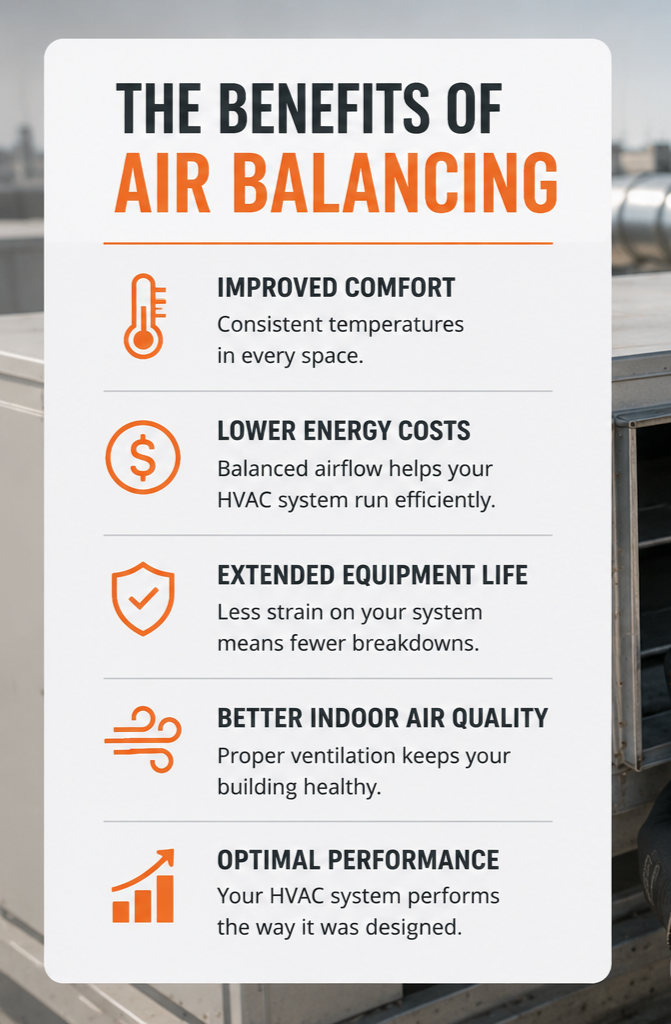
Improved Occupant Comfort
One of the most noticeable advantages of commercial air balancing is improved comfort.
Without balanced airflow, some areas may feel excessively warm while others remain too cold. Conference rooms, offices, classrooms, and common areas can experience uneven temperatures that lead to occupant complaints and reduced productivity.
Balancing the system helps ensure each space receives the appropriate amount of conditioned air, creating a more consistent indoor environment throughout the building.
Increased Energy Efficiency
When airflow is restricted or uneven, HVAC equipment often works harder than necessary to maintain set temperatures.
Properly balanced systems allow heating and cooling equipment to operate more efficiently by reducing unnecessary runtime and preventing over-conditioning in certain areas.
As a result, many building owners experience:
- Lower utility bills
- Reduced energy consumption
- More efficient HVAC operation
- Improved overall building performance
For organizations looking to reduce operating expenses, commercial air balancing is a valuable investment.
Extends the Life of HVAC Equipment
Uneven airflow places unnecessary strain on HVAC components.
Fans, motors, compressors, boilers, chillers, and air-handling units may cycle more frequently or run longer than intended when airflow problems occur.
Over time, this additional workload increases wear on equipment and can lead to premature failures.
By restoring proper airflow, HVAC air balancing helps reduce stress on mechanical systems, allowing equipment to operate as designed and often extending its service life.
Better Indoor Air Quality
Proper airflow affects more than just temperature. It also plays an important role in indoor air quality.
When airflow is balanced correctly, ventilation systems can deliver fresh outdoor air more effectively while helping remove airborne contaminants, excess humidity, and stale air.
This is especially important in facilities such as:
- Healthcare buildings
- Schools and universities
- Office buildings
- Manufacturing facilities
- Government buildings
Maintaining proper ventilation helps create a healthier and more comfortable indoor environment for employees, customers, students, and visitors.
Common Signs Your Building Needs Air Balancing
Many facility managers don’t realize airflow problems are affecting their building until occupants begin reporting comfort issues.
Some common warning signs include:
- Hot and cold spots throughout the building
- Rooms that never reach the desired temperature
- Weak airflow from supply vents
- Excessive HVAC runtime
- Rising energy bills
- Frequent thermostat adjustments
- Occupant comfort complaints
- Recent renovations or tenant build-outs
If you’re experiencing one or more of these issues, scheduling a commercial air balancing service may help identify the underlying cause.
When Should Air Balancing Be Performed?
Many people assume air balancing is only necessary after installing a new HVAC system. While it is an important part of new construction, there are several other situations where balancing should be considered.
Air balancing is recommended after:
- Installing new HVAC equipment
- Renovating or expanding a building
- Reconfiguring office layouts
- Replacing ductwork
- Upgrading air handling units
- Making significant occupancy changes
- Persistent comfort complaints
- Changes to building automation or HVAC controls
Even buildings with preventive maintenance programs can benefit from periodic airflow evaluations to ensure systems continue operating efficiently over time.
Air Balancing Is Part of a Complete HVAC Strategy
Air balancing works best when combined with other commercial HVAC services.
Preventive maintenance helps keep equipment operating efficiently, while inspections identify worn components before they fail. Building automation systems optimize scheduling and system performance, and properly balanced airflow ensures those systems can perform as intended.
Together, these services improve comfort, reduce energy waste, and help maximize the return on your HVAC investment.
Working with an experienced commercial mechanical contractor ensures each part of your HVAC system functions as a complete, integrated solution rather than a collection of individual components.
Why Professional Air Balancing Matters
Proper air balancing requires specialized training and precision instruments. Making adjustments without accurate airflow measurements can actually make problems worse.
Experienced HVAC professionals use calibrated testing equipment to evaluate airflow, verify system performance, and make precise adjustments that improve efficiency without compromising comfort.
Professional balancing also provides facility managers with valuable performance data that can support future maintenance and capital planning decisions.
Optimize Your Building’s HVAC Performance With First Service Mechanical
Comfort complaints, uneven temperatures, and rising energy costs often point to airflow issues rather than equipment failure. Investing in commercial air balancing helps ensure your HVAC system delivers consistent comfort, improved energy efficiency, and reliable long-term performance.
At First Service Mechanical, our experienced team provides comprehensive commercial HVAC services designed to keep your building operating at its best. From HVAC air balancing and preventive maintenance to equipment repairs, system upgrades, and complete mechanical solutions, we help businesses throughout Utah improve comfort, reduce operating costs, and maximize HVAC performance.
If you’re ready to optimize your commercial HVAC system, contact First Service Mechanical to schedule a professional system evaluation and learn how proper air balancing can benefit your facility.

Leave a Reply